
October 2, 2026
A practical 2000-calorie flexible plan with a 7-day template, simple swap rules, and high-protein, high-fiber meal ideas to stay full without macro math.
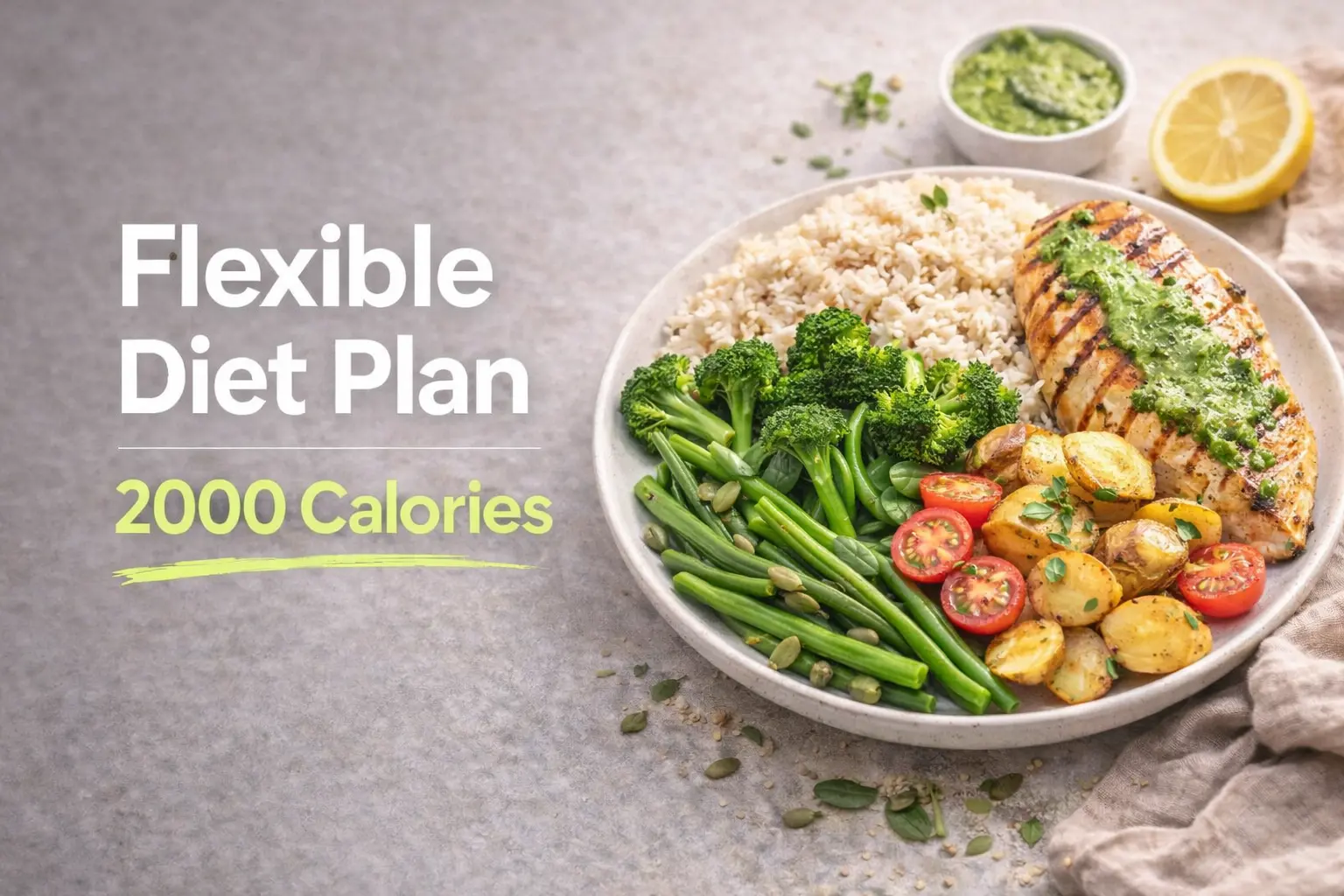
TL;DR: A 2000-calorie plan is often a sweet spot because you can eat satisfying meals without constant hunger. This flexible structure gives you a realistic 7-day template, simple swap rules, and grocery staples so you can stay consistent without macro math.
A flexible plan means you follow a repeatable frame and swap meals inside it. You aim for a daily range like 1950 to 2050 using consistent meals, not perfect tracking.
At 2000, the biggest mistake is letting snacks and drinks quietly eat up your calories, then feeling like meals are smaller than they should be. A better approach is three main meals, one planned snack, and a simple rule: every main meal includes protein and fiber.
If you want a structure like this without planning from scratch, PlanEat AI can generate a weekly meal plan and a grouped grocery list personalized to your goals, dislikes, cooking time, and basic restrictions, with simple meal swaps when a meal does not fit your week.
Instead of tracking every ingredient, use meal buckets and a few repeatable rules. This keeps the plan practical and helps you stay close to 2000 on most days.
This is a realistic template you can repeat and swap. Portions are in US units and daily totals are approximate.
If you want more ideas for building meals that stay balanced without tracking, Healthy Eating Basics: Build a Balanced Plate is a good reference.
If you find a week that works, PlanEat AI helps you save the plan as reusable and swap meals quickly while keeping a steady base of repeatable protein and fiber across the week.
A flexible plan only works if swaps are simple. Use these rules to stay close to your target without doing math.
It depends on your size, activity level, and starting point. For many people it can create a moderate deficit, while for others it may be close to maintenance. Use energy, hunger, and progress over two to three weeks as feedback.
Plan one snack on purpose, then keep the rest of your day meal-based. Build snacks around protein and fiber, like yogurt and fruit, or hummus and veggies, instead of grazing on “treat snacks” all afternoon.
Yes, if you use repeatable meals and consistent portions. Use the same breakfast and lunch patterns, then swap dinners within the same template. Big day-to-day changes make it harder to stay near 2000.
First check consistency: meal timing, protein at each meal, sleep, and hydration. If you are consistent and still feel low energy or stalled progress, adjust portions or consider a different target.
Educational content only, not medical advice.
A practical 2000-calorie flexible plan with a 7-day template, simple swap rules, and high-protein, high-fiber meal ideas to stay full without macro math.