
October 2, 2026
Practical 3000-calorie vegan plan with a 7-day menu, staple grocery list, and easy calorie boosters to stay energized without tracking macros.
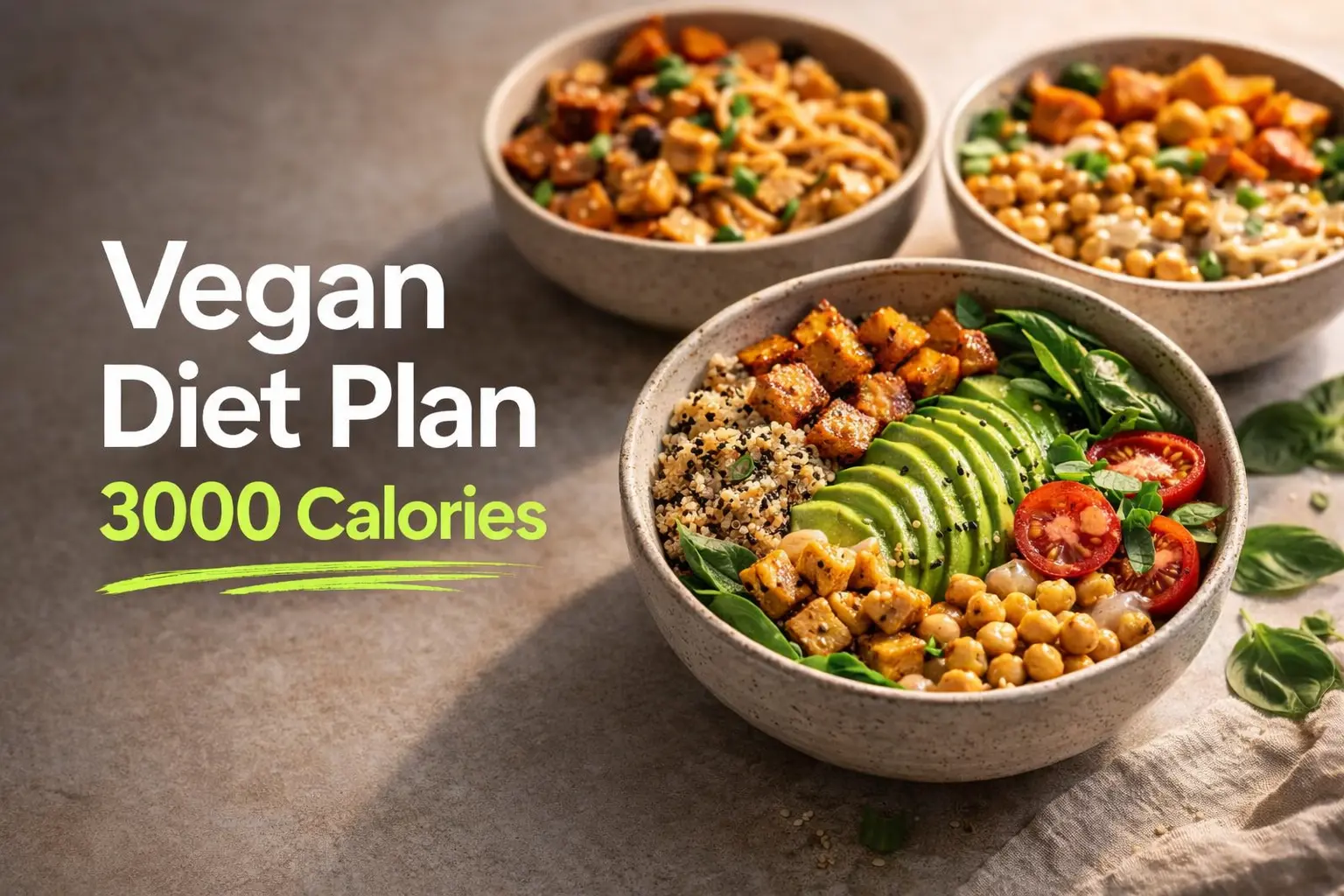
TL;DR: This 3000-calorie vegan plan is built for high energy needs: repeatable meals, higher-protein plant staples, and calorie-dense add-ons so you can hit 3000 without feeling like you are eating all day. You will get a 7-day menu example, a practical grocery list, and simple portion boosters to adjust without macro math.
At 3000 calories, the biggest challenge is not “ideas,” it is volume and consistency. Many vegan plans look healthy but end up too low in protein early in the day, then you chase calories at night with random snacks.
The simplest fix is structure. Anchor every main meal with protein, use slow carbs for steady energy, and add healthy fats intentionally so you can reach 3000 without massive plates. Treat 3000 as a target range, not an exact number. A window like 2900 to 3100 is often more realistic than precision.
If you are still building your vegan routine, Vegan Meal Planning for Beginners (Balanced & Easy) helps you set a repeatable structure so the week does not feel like constant improvisation.
If you want a weekly structure like this without planning from scratch, PlanEat AI can generate a weekly meal plan and a grouped grocery list personalized to your goals, dislikes, cooking time, and basic restrictions, with simple meal swaps when a meal does not fit your week.
Instead of tracking every ingredient, use meal buckets plus a few “calorie boosters” you can repeat. This helps you avoid long gaps and makes it easier to reach 3000 even on busy days.
If you tend to under-eat earlier in the day, set one rule: breakfast must include both protein and a carb. That one habit often fixes late-night hunger.
This week uses repeatable templates to keep shopping simple. Portions are described in US units and daily totals are approximate.
If the week feels repetitive, that is intentional. At 3000 calories, repeating proteins and sauces is what makes the plan realistic, easier to shop for, and easier to stick to.
At higher calories, planning fails when you run out of your “boosters.” Keep a few calorie-dense staples on hand so meals can scale up without getting complicated.
For stocking basics, Pantry Staples: Build a Healthy Kitchen (Practical Checklist) is a strong reference. If you want to keep costs and waste under control while buying staples in larger quantities, Smart Bulk Buying and Freezing (2026) fits this style of planning.
If you find a week you like, PlanEat AI helps you save the plan as reusable and swap meals quickly while keeping a steady base of repeatable protein and fiber across the week.
Yes, but it usually requires intentional calorie boosters like nuts, seeds, tahini, olive oil, and larger carb portions. Most people struggle when they rely on low-calorie salads and small breakfasts, then try to catch up late.
Repeat protein anchors in every main meal: tofu, tempeh, edamame, lentils, beans, and soy foods. It is usually easier to repeat two or three staples all week than to try new protein sources every day.
Some people do, especially vitamin B12, and sometimes vitamin D or omega-3 depending on diet and labs. This is worth discussing with a qualified clinician, particularly if you have symptoms, are pregnant, or take medications.
They are estimates. Brands, portions, and cooking methods change totals, so use the plan as a structure and adjust based on hunger, energy, and results over a couple of weeks.
Practical 3000-calorie vegan plan with a 7-day menu, staple grocery list, and easy calorie boosters to stay energized without tracking macros.