
October 2, 2026
Simple workout meal timing rules for real life: what to eat before and after training based on your schedule, plus easy meal ideas and a weekly routine.
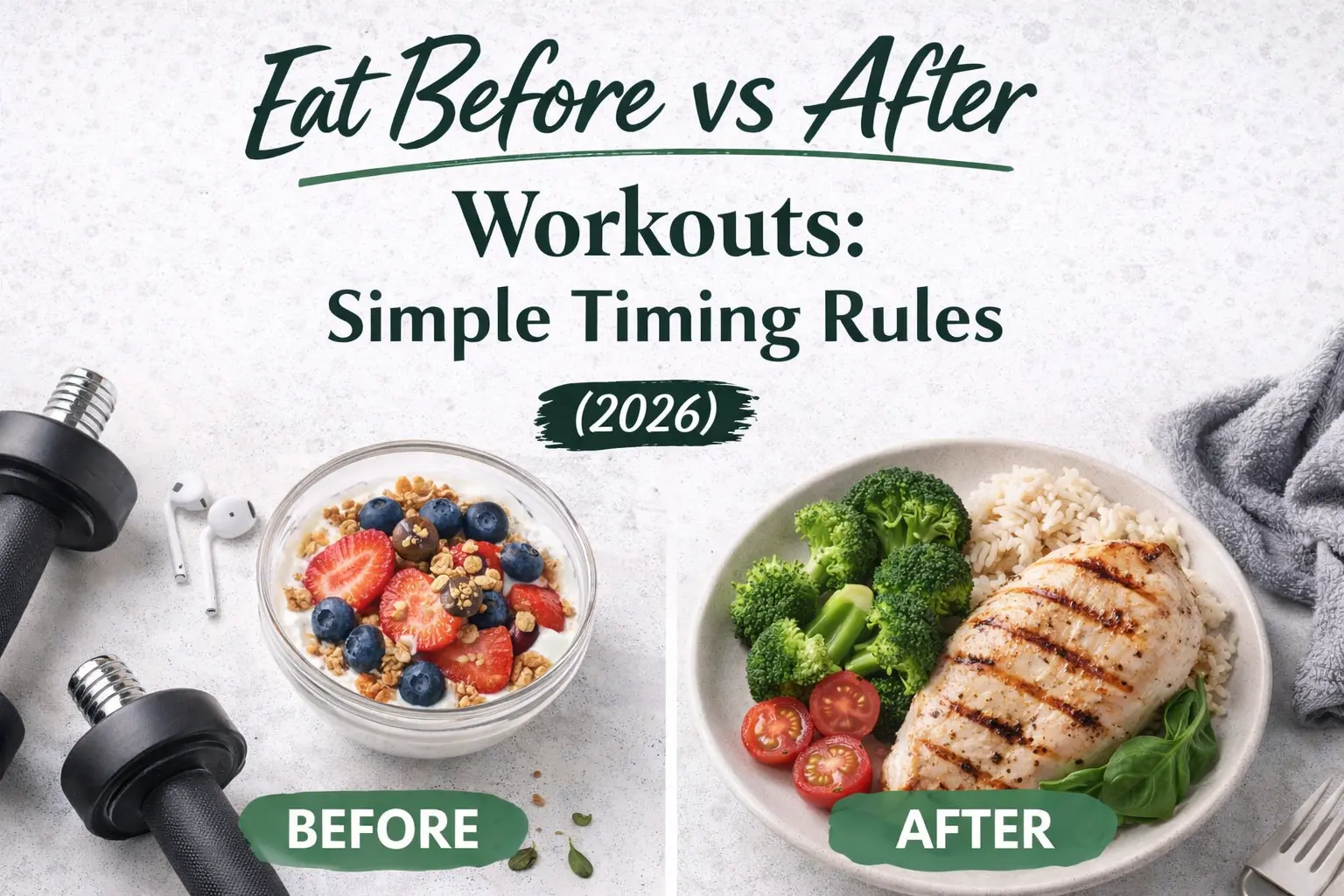
TL;DR: You do not need perfect timing to see results, but eating something before and eating a real meal after can make workouts feel better and recovery easier. Use these simple timing rules based on when you train and how much time you have.
Workout nutrition gets overcomplicated online. In real life, the biggest drivers are total weekly consistency and whether you are regularly under-fueled.
Timing still matters, but mostly for comfort and performance. A little food before training can improve energy, and a real meal after training can reduce cravings and support recovery. You do not need a special “window.” You need a repeatable routine.
If you want a weekly structure that supports training without macro math, PlanEat AI can generate a weekly meal plan and a grouped grocery list personalized to your goals, dislikes, cooking time, and basic restrictions, with simple swaps when a meal does not fit your day.
Your pre-workout goal is simple: show up with enough energy without upsetting your stomach. The best choice depends on how long you have.
If you have 2 to 3 hours Eat a normal meal with protein and carbs, and keep fats moderate. This is the most comfortable option for most people.
If you have 60 to 90 minutes Go smaller and simpler: a light meal or larger snack with carbs and some protein.
If you have 15 to 45 minutes Keep it very easy to digest: mostly carbs, with a little protein if you tolerate it. Avoid heavy fat and huge portions.
Easy pre-workout options from normal US groceries:
If you prefer a simple “plate” structure without tracking, Healthy Eating Basics: Build a Balanced Plate is a good baseline for building pre-workout meals that feel stable.
Post-workout eating is where many people go wrong. They either skip it and end up starving later, or they treat it like a free-for-all.
The simplest goal is a normal meal with protein and carbs, plus some produce. This supports recovery and keeps hunger steady.
Practical post-workout rules:
Easy post-workout meals:
Most timing problems are actually planning problems. When meals are inconsistent, workouts feel harder and cravings get worse.
Try this weekly approach:
If busy nights are your main issue, Emergency Meals for Busy Nights: What to Eat When You Have No Time (2026) can help you avoid ending the day in snack mode.
If you find a training-week routine you like, PlanEat AI helps you save a plan as reusable and swap meals quickly while keeping a steady base of repeatable protein and fiber across the week.
Not always, but many people train better with some fuel. If you feel lightheaded, weak, or unusually hungry during workouts, a small carb-forward snack can help.
Weight loss is mostly about your overall weekly intake and consistency, not perfect timing. Eating in a way that supports training quality and reduces cravings often makes weight loss easier to sustain.
You do not need a strict window. A normal meal within a couple of hours works well for most people. If you cannot eat a full meal, a protein-forward snack can bridge the gap.
If you can tolerate food, a small snack like fruit and yogurt can help. If you cannot, train and then prioritize a solid breakfast afterward so you do not start the day under-fueled.
Educational content only, not medical advice.
Simple workout meal timing rules for real life: what to eat before and after training based on your schedule, plus easy meal ideas and a weekly routine.