
October 26, 2026
A simple high-fiber grocery list for the US with staples by store section, easy meal templates, and tips to increase fiber without bloating.
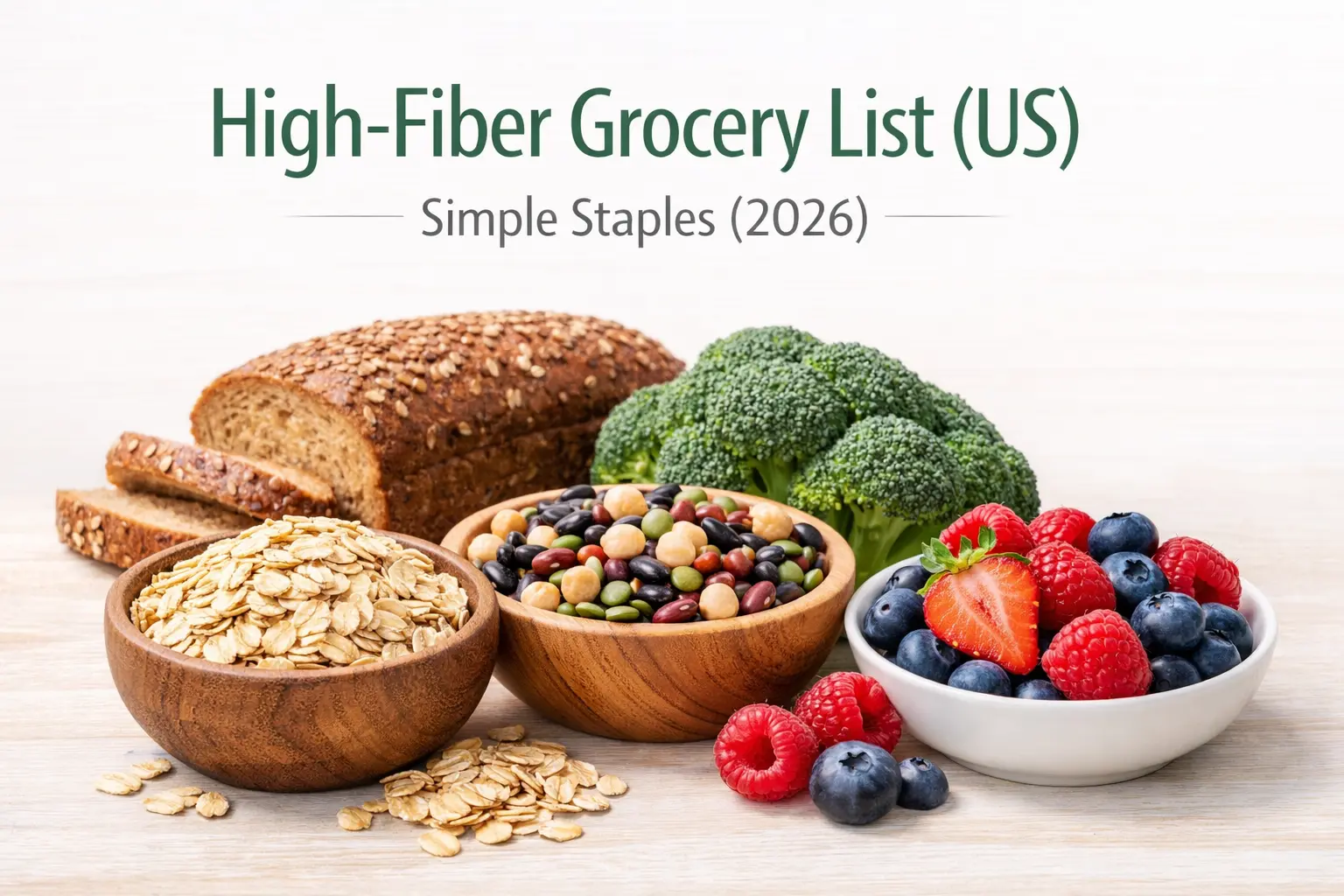
TL;DR: A high-fiber diet is easier when your kitchen is stocked with a few repeatable staples, not when you rely on “perfect” meals. This US grocery list focuses on simple foods you can use all week, plus easy ways to turn them into breakfasts, lunches, dinners, and snacks.
Most people think fiber means salads, but fiber is really a shopping habit. If your cart is mostly protein and refined carbs, fiber will stay low no matter how motivated you are.
The simplest approach is to pick a small rotation of high-fiber staples you actually like, then repeat them weekly. That way, fiber shows up automatically in meals instead of feeling like an extra task.
If you want your grocery list to turn into a real week of meals, PlanEat AI can generate a weekly meal plan and a grouped grocery list personalized to your goals, dislikes, cooking time, and basic restrictions, with simple swaps when a meal does not fit your week.
This list is built for US grocery stores and focuses on items that are easy to find, affordable, and easy to use.
If you want specific methods for adding these foods fast, How to Get More Fiber Fast: 12 Easy Methods (2026) pairs well with this grocery list.
A grocery list only helps if it becomes meals. Use a few repeatable templates so the week stays simple.
If you want a simple structure for building meals without tracking, Healthy Eating Basics: Build a Balanced Plate can help you keep meals balanced while fiber increases naturally.
If you find a high-fiber weekly structure that works, PlanEat AI helps you save a plan as reusable and swap meals quickly while keeping a steady base of repeatable protein and fiber across the week.
Oats or beans are usually the easiest. Oats work in breakfast with almost no extra effort, and beans can be added to bowls, salads, and wraps.
Increase slowly and drink more water. Start with one change, like oats at breakfast or beans at lunch, for a few days before adding another.
Most people can get enough fiber from food if they shop and plan for it. Supplements can help in specific cases, but food usually works better because it also adds micronutrients and helps meals feel more satisfying.
A bowl made from rice or quinoa, canned beans, chopped veggies, and salsa or tahini is one of the easiest. It is fast, repeatable, and easy to adjust.
Educational content only, not medical advice.
A simple high-fiber grocery list for the US with staples by store section, easy meal templates, and tips to increase fiber without bloating.

