
October 2, 2026
Learn simple hand and plate based portion control methods that do not require a scale, plus an easy daily pattern, key habits, and answers to common questions.

TL;DR: Portion control does not require a food scale or strict calorie counting. Simple visual cues like hand portions and the plate method let you build balanced meals, keep portions consistent, and adjust up or down based on hunger and goals.
Portion size is one of the simplest levers you can use for weight loss, weight maintenance, or steady energy through the day. If portions slowly grow over time, even healthy foods can lead to more calories than you intended. If portions are too small, you will feel deprived, overthink food, and often rebound with overeating later.
A realistic goal is not to eat perfect portions every time, but to make your average plate over the week match your needs. That is where simple visual rules help. Instead of weighing everything, you use your own body and plate as your measuring tools.
If portion sizes and food groups feel confusing, it helps to start with a basic visual rule for building meals, like the one in Healthy Eating Basics: Build a Balanced Plate.
You do not need a scale to get consistent with portions. These visual tools work in most situations at home and when eating out.
Your hand travels everywhere with you and roughly matches your body size, so it is a useful tool.
These are starting points, not fixed rules. You can increase or decrease one category based on your hunger, goals, and how you feel over several weeks.
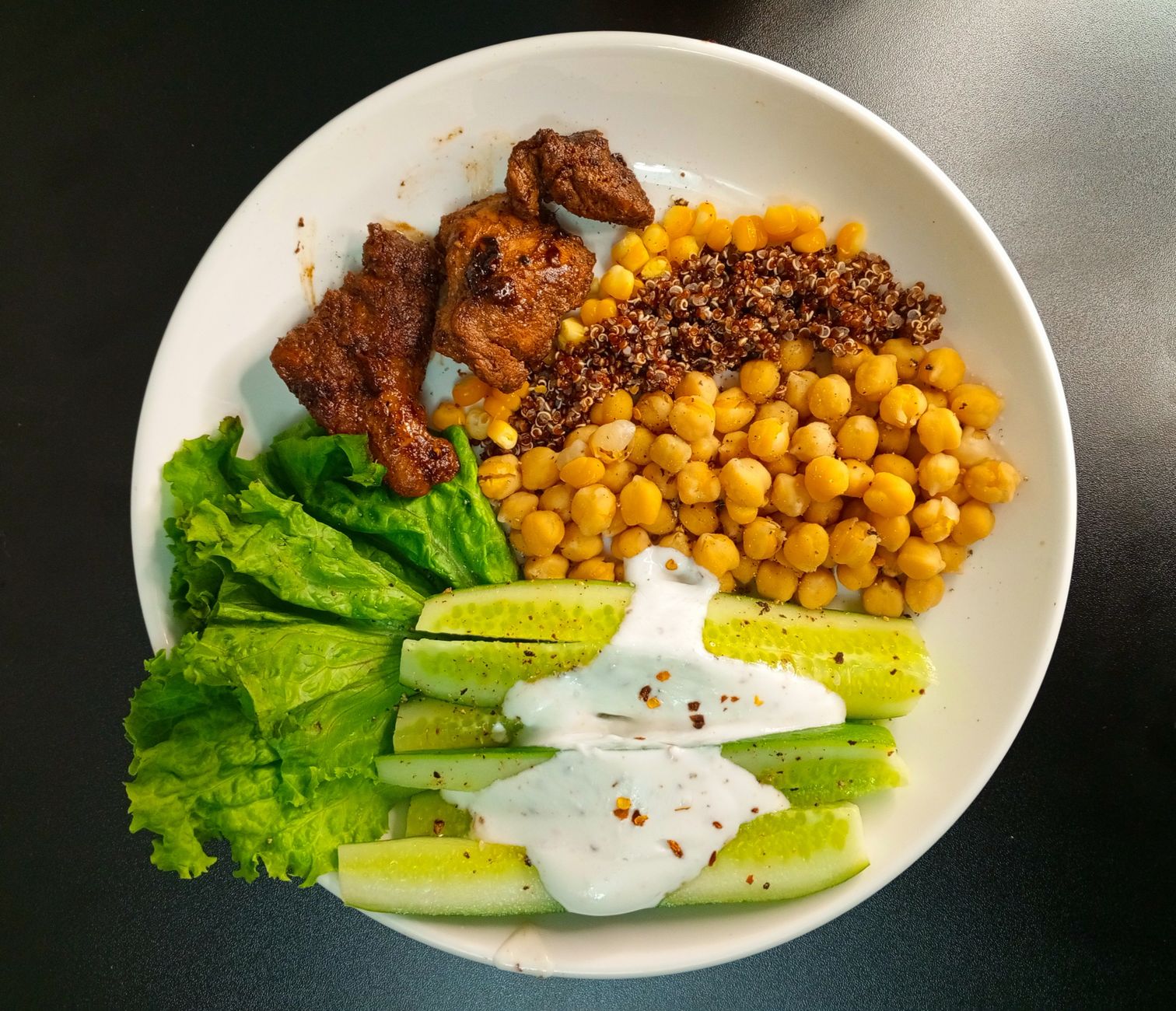
When you have a plate in front of you, use it as a simple map.
You do not have to be exact. The point is to see clearly if protein and vegetables are missing or if the starchy part has taken over the plate.
You can use the same structure and move portions slightly up or down.
If you prefer not to plan every portion from scratch, you can use PlanEat AI to generate a weekly meal plan where each meal already has basic calories and macros calculated. You then apply these hand and plate cues at the table so your portions stay aligned with your goals without using a scale.
Below is an example of a day that uses hand and plate portions. You can reuse this pattern across the week and swap ingredients while keeping the structure.
Over a week, this type of pattern matters more than any single meal. You can swap salmon for chicken, lentils for beans, potatoes for rice, and still keep the same visual balance.
If you want to see how a full week of balanced meals might look, you can connect this pattern to full menu ideas in 7-Day Balanced Meal Plan (With Grocery List) and then use the same hand and plate rules to adjust portions.
If this pattern feels realistic, you can save similar days as reusable plans in PlanEat AI. The app keeps the meal structure and grouped grocery list, and you adjust hand sized portions up or down as your hunger and progress change.
Portion control is not only about what is on the plate, but also about how you eat and set up your environment.
Aim to give yourself at least ten to fifteen minutes for most meals. Put the fork down between bites, take small sips of water, and pause halfway through your plate to check if you are still hungry or just eating on autopilot.
Instead of placing serving dishes on the table, plate food in the kitchen and bring only your plate to the table. This makes it easier to notice if you really want seconds rather than automatically refilling.
Dividing snacks like nuts, chips, or trail mix into small containers makes the default portion match what you actually want to eat. Eating directly from a bag makes it much easier to lose track.
Restaurant meals are often larger than what you would serve yourself at home. You can share an entree, ask for a to go box and set aside half at the start, or focus on eating a palm or two of protein, plenty of vegetables if available, and a moderate portion of starch.
If late night or afternoon sugar cravings are your main challenge, pairing these habits with strategies from How to Stop Craving Sweets All the Time can help. It is easier to respect portions when your energy and appetite feel more stable across the day.
Over time, these small habits work together with your visual portion rules so you do not have to think about every bite.
A serving is a standard amount listed on labels or in guidelines, such as one cup of cooked pasta. A portion is how much you actually put on your plate and eat. Portion control is about choosing portions that make sense for your body and goals, not trying to match every label serving exactly.
If you are constantly thinking about food, feel light headed, or arrive at the next meal uncomfortably hungry on most days, your portions may be too small. Try adding a little more protein or smart carbohydrates to main meals and watch how your energy, hunger, and mood respond over at least one to two weeks.
Yes, but remember that hand based methods are guides, not exact rules. Smaller hands usually match smaller bodies that need fewer calories, and larger hands often match larger or more active bodies. You can still adjust portions over time if your weight, energy, or hunger suggest that the default is not quite right.
Use the same visual rules. Look for a source of protein about the size of your palm or a bit more, add vegetables where possible, and treat fries, bread, or desserts as smaller shared portions instead of automatic add ons. You do not have to be perfect, but aiming for this pattern most of the time helps.
For many people, consistent portion control plus mostly whole foods is enough to see gradual progress, especially if combined with movement and reasonable sleep. If you have medical conditions, take medications that affect weight, or have a significant amount of weight to lose, talk to a health professional for extra guidance.
Educational content only - not medical advice.
Learn simple hand and plate based portion control methods that do not require a scale, plus an easy daily pattern, key habits, and answers to common questions.