
October 2, 2026
Night workout nutrition made simple: what to eat before and after evening training, timing rules by schedule, and light dinners that support recovery without harming sleep.
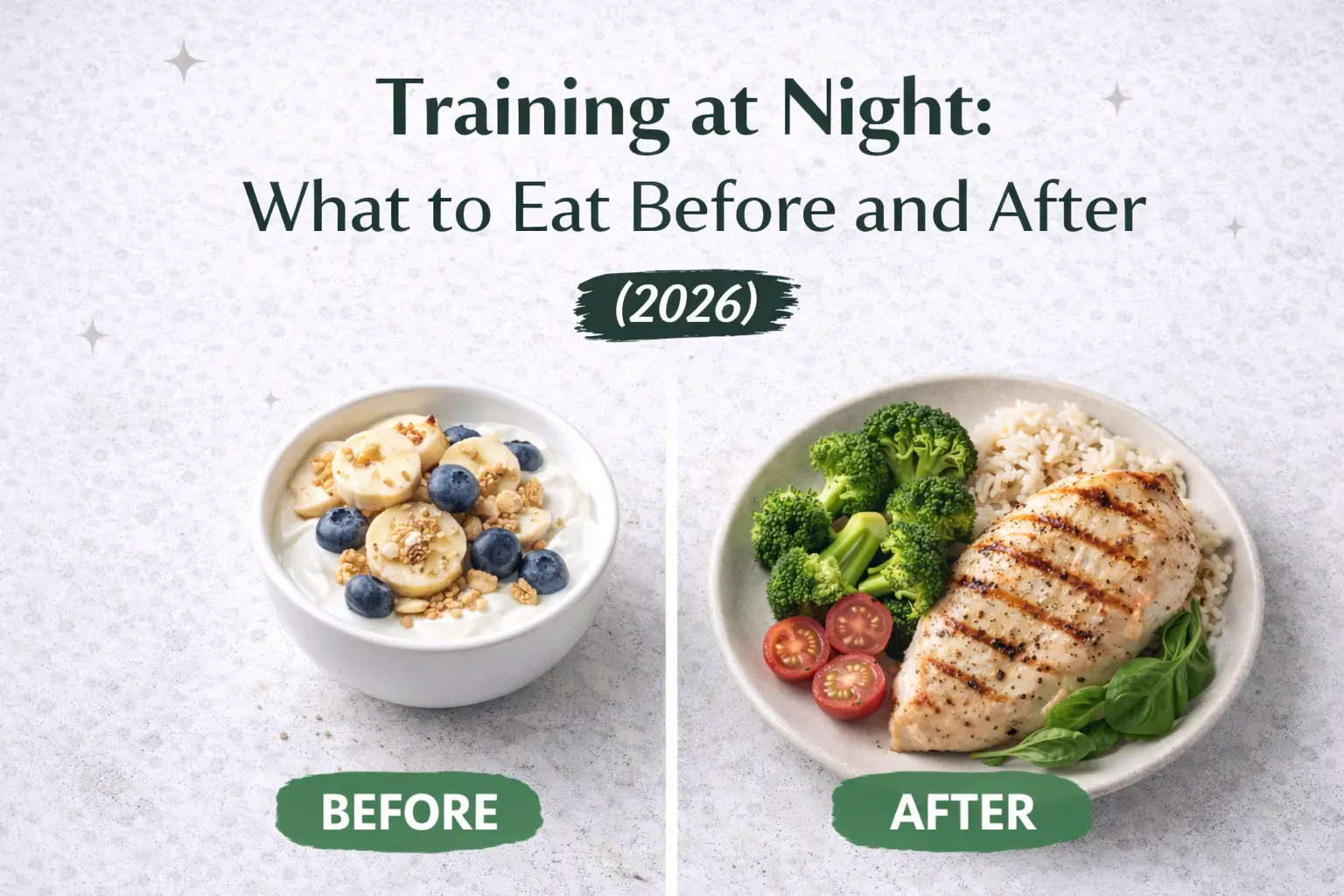
TL;DR: Night training works best when you avoid two extremes: training on an empty tank and eating a heavy meal right before bed. The simplest approach is a normal meal 2 to 3 hours before training, a small snack if needed, then a lighter protein-forward dinner after.
Evening workouts can improve consistency for people with busy days, but they also create common problems: low energy if you under-eat earlier, stomach discomfort if you eat too close to training, and late-night hunger if you finish a hard session and go straight to bed.
The fix is planning, not perfection. A few timing rules and repeatable meal options will cover most scenarios.
If you want a weekly structure that supports evening training without macro math, PlanEat AI can generate a weekly meal plan and a grouped grocery list personalized to your goals, dislikes, cooking time, and basic restrictions, with simple swaps when a meal does not fit your day.
Your pre-workout goal is energy and comfort. The best choice depends on the time gap between dinner and training.
If you have 2 to 3 hours. Eat a normal meal with protein and carbs, and keep fats moderate. This is the easiest option for performance and digestion.
If you have 60 to 90 minutes. Go smaller: a lighter meal or larger snack with carbs and some protein.
If you have 15 to 45 minutes. Keep it simple and easy to digest: mostly carbs, with a little protein if you tolerate it. Avoid heavy fats and huge portions.
Good evening pre-workout options:
After training at night, you want enough protein and carbs to recover, without turning it into a heavy meal that affects sleep.
A practical goal is a lighter plate that still feels like dinner:
Easy post-workout dinner ideas:
If you finish training late and you are not hungry immediately, do not force a huge dinner. A smaller protein-forward meal or snack can be enough.
Night training can increase hunger later, especially if you under-ate during the day. Many people mistake that hunger for “low willpower,” but it is often just a fuel problem.
Simple ways to reduce late-night cravings:
If your evenings are chaotic and dinner is often rushed, Emergency Meals for Busy Nights: What to Eat When You Have No Time (2026) can help you build fast defaults that still feel like real meals.
If you find an evening-training routine that works, PlanEat AI helps you save a plan as reusable and swap meals quickly while keeping a steady base of repeatable protein and fiber across the week.
Not necessarily. Many people recover better with a protein-forward meal after training. The key is keeping it lighter and easier to digest so it does not interfere with sleep.
Plan a normal dinner 2 to 3 hours before training if possible. After training, use a lighter option like a yogurt bowl plus toast, eggs and potatoes, or a small rice bowl with tofu and vegetables.
Not automatically. Carbs can support recovery and may help some people sleep better. The practical goal is balanced portions and avoiding heavy, greasy meals right before bed.
Often it is because you under-ate earlier or your pre-workout meal was too small. Try a steadier lunch, a planned pre-workout snack, and a lighter but complete post-workout meal.
Educational content only, not medical advice.
Night workout nutrition made simple: what to eat before and after evening training, timing rules by schedule, and light dinners that support recovery without harming sleep.