
October 2, 2026
Practical 1500-calorie vegetarian meal plan with a 7-day menu example, grocery staples, and easy swaps to stay full without tracking every detail.
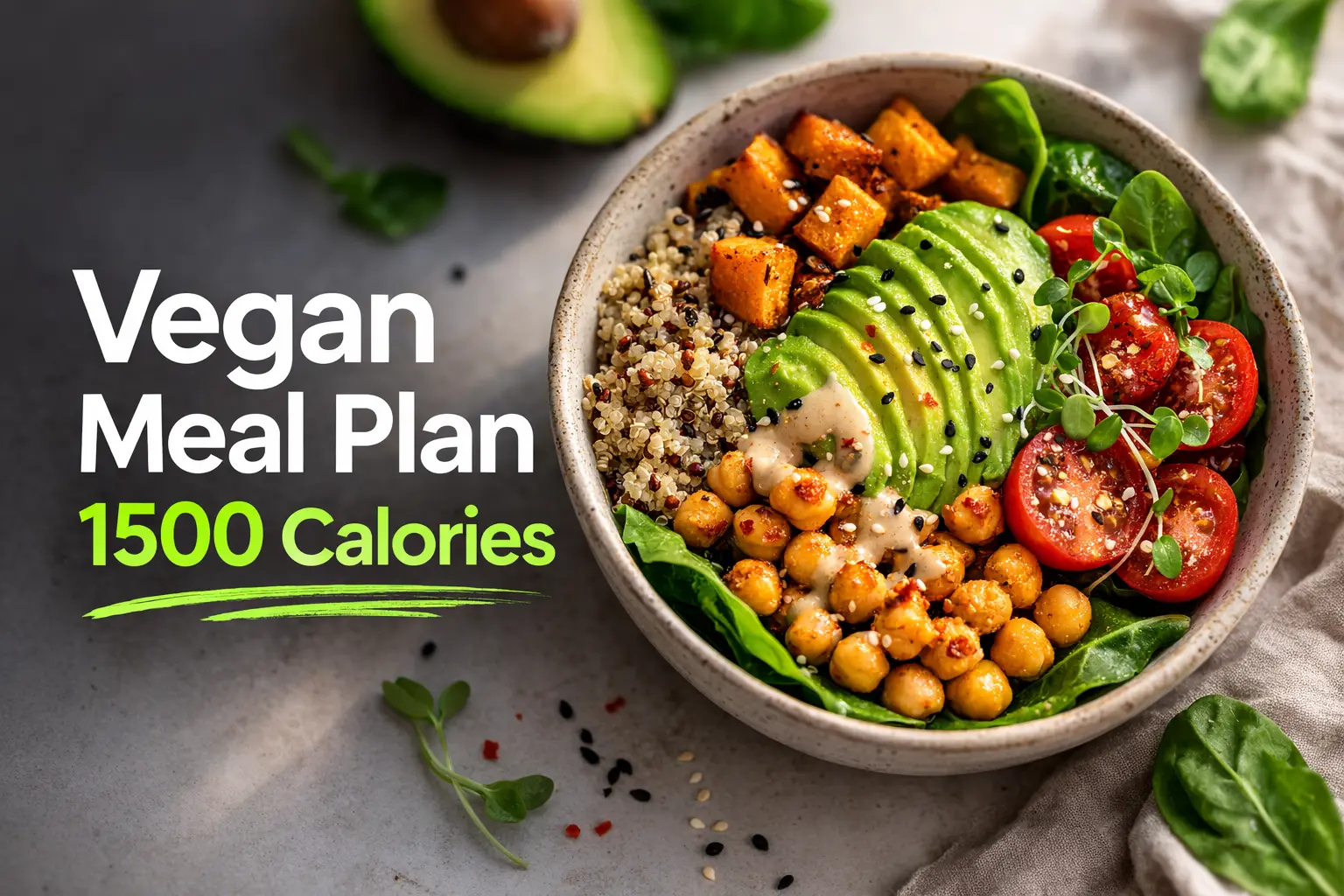
TL;DR: This 1500-calorie vegetarian plan is designed to feel realistic: simple meals, repeatable ingredients, and enough protein and fiber to keep you full. You will get a 7-day menu example, a practical grocery staple list, and easy ways to adjust without turning eating into constant math.
A 1500-calorie day works best when it is built from real meals, not a string of tiny snacks. The easiest way to keep it satisfying is to anchor each meal with protein, add high-fiber carbs, and use fats intentionally instead of accidentally.
Treat 1500 as a target range, not a perfect number. Packaged labels, portions, and cooking methods vary, so a daily window like 1450 to 1550 is more realistic than chasing precision.
If you want a week like this without planning from scratch, PlanEat AI generates a weekly meal plan and a grouped grocery list personalized to your goals, dislikes, cooking time, and basic restrictions, with simple swaps when a meal does not fit your week.
Instead of tracking every ingredient, use a simple meal structure. This prevents the common pattern where breakfast is too light, hunger spikes mid-afternoon, and dinner turns into catch-up eating.
If you prefer portion shortcuts over numbers, Portion Control Made Easy (No Scale Needed) can help you stay consistent without weighing food.
This is a practical week built from repeatable templates. Portions are described in US units, and daily totals are approximate.
If you want a vegetarian week with a stronger protein focus, Vegetarian High-Protein Meal Plan (7-Day) can give you extra ideas to swap in.
If you find a week you like, PlanEat AI helps you save the plan as reusable and swap meals quickly while keeping a steady base of repeatable protein and fiber across the week.
You do not need specialty foods to make this work. You need a few reliable staples that can become multiple meals.
For a quick refresher on building a plan that is actually usable, Meal Planning Basics: How to Start (Beginner Guide) is a solid starting point.
It depends on your size, activity level, and goals. Some people feel great at this level, while others need more. Use energy, hunger, and progress over two to three weeks as feedback, and consider talking with a qualified clinician if you have medical conditions.
Use a protein anchor at every meal: eggs, Greek yogurt, cottage cheese, tofu, tempeh, beans, and lentils. Repeating two or three protein staples each week makes this much easier than trying to be creative every day.
Greek yogurt bowls, egg scrambles, tofu stir-fries, lentil soups, and bean wraps are reliable because they cook fast and use common ingredients. Keep a few frozen vegetables and canned beans on hand so you are never stuck.
They are estimates. Brands, portions, and cooking methods change totals, so use this as a structure and adjust based on hunger, energy, and results.
Practical 1500-calorie vegetarian meal plan with a 7-day menu example, grocery staples, and easy swaps to stay full without tracking every detail.