
October 2, 2026
Make frozen vegetables and fruit taste better with simple cooking hacks: higher heat, less moisture, better timing for sauces, and easy flavor boosters
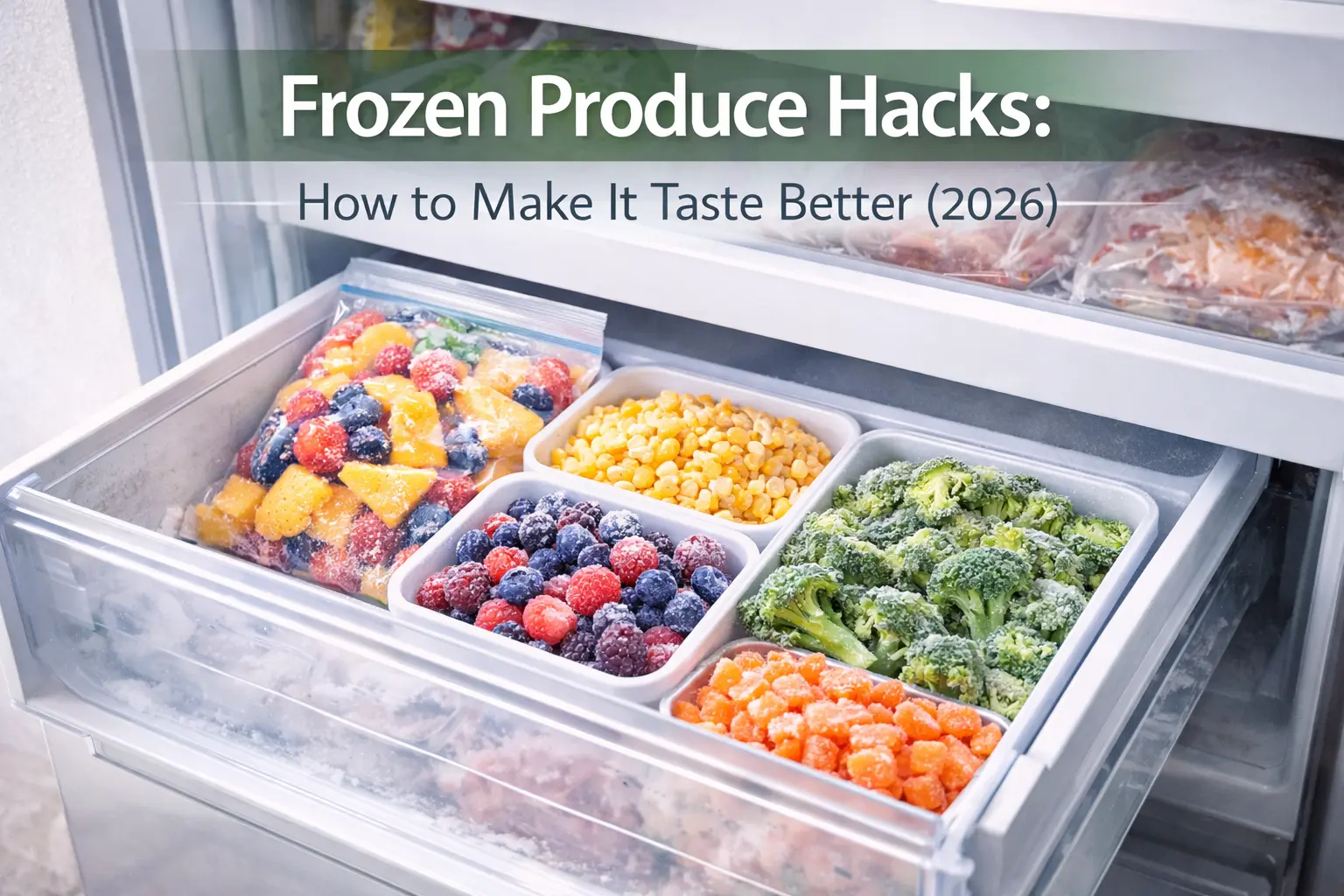
TL;DR: Frozen produce can taste surprisingly good if you stop treating it like fresh. The biggest wins are cooking it hotter, removing extra moisture, and using simple flavor boosters. These hacks help frozen veggies and fruit feel more like real meals, not “backup food.”
Frozen vegetables often taste watery or bland because they release moisture as they heat. If you steam them in a microwave bag or add them straight into a pan on low heat, they stay soft and soggy.
The fix is technique, not a different brand. When you cook frozen produce with higher heat, drain moisture, and add seasoning at the right time, the texture and flavor improve fast.
If you want a weekly plan that uses freezer staples on purpose, PlanEat AI can generate a weekly meal plan and a grouped grocery list personalized to your goals, dislikes, cooking time, and basic restrictions, with simple swaps when meals need to change.
These are the small moves that turn frozen vegetables into something you want to eat. You do not need all of them. Pick the ones that match how you cook.
If you want to build meals that stay balanced even when you rely on freezer food, Healthy Eating Basics: Build a Balanced Plate is a good reference.
Frozen produce becomes enjoyable when you pair it with strong, simple flavors. You do not need complicated recipes.
Easy flavor boosters to keep on hand:
A fast “default combo” that works for many veggies is oil plus garlic powder plus lemon. Another reliable combo is soy sauce plus ginger plus a small amount of sesame oil.
Frozen berries and mango are great, but texture matters. The goal is to use frozen fruit where the texture makes sense.
Use frozen fruit in these ways:
If you want to increase fiber with frozen fruit and vegetables, High-Fiber Grocery List (US): Simple Staples (2026) pairs well with this approach.
If you find a freezer-friendly routine you like, PlanEat AI helps you save a plan as reusable and swap meals quickly while keeping a steady base of repeatable protein and fiber across the week.
Often, yes. Frozen produce is typically picked and frozen quickly, which can preserve nutrients well. What matters most is that you eat vegetables and fruit consistently, in whatever form you will actually use.
Usually it is too much moisture and not enough heat. Cook frozen veggies hotter, use a wide pan or hot sheet pan, and add sauces at the end so they can brown instead of steaming.
Not always. For roasting and high-heat sautéing, cooking from frozen often works well. If you are short on time or want better texture fast, microwave to defrost and then finish with high heat.
Pick the ones you will actually use weekly. For many people, frozen broccoli, mixed vegetables, spinach, cauliflower rice, and edamame are the most versatile.
Educational content only, not medical advice.
Make frozen vegetables and fruit taste better with simple cooking hacks: higher heat, less moisture, better timing for sauces, and easy flavor boosters