
October 2, 2026
Try eight Greek yogurt snack ideas with measured toppings, plain-yogurt label tips, a five-snack grocery list, and practical prep and chilled-storage advice.
Greek yogurt snack ideas can be as simple as plain yogurt with berries and nuts, apple and oats, or a savory cucumber dip. Below are eight combinations with measured starting portions, followed by a shopping list for five snacks. The same yogurt base makes shopping easier; the toppings let you change the flavor without buying five different flavored pots.
For high protein Greek yogurt snacks, check the serving weight and protein together. A large pot and a single-serve cup may show different numbers simply because the listed portions differ. Fat level, flavoring, and brand can change the rest of the label too.
As one concrete example, FAGE Total 0% in its 170 g serving lists 90 calories, 18 g protein, 5 g total sugars, and 0 g added sugars. Its 150 g container has a different label. These are yogurt-only figures for that product, not nutrition totals for every bowl below; check your current package.
For low sugar Greek yogurt snacks, start by comparing added sugars rather than assuming plain means sugar-free. The FDA explains the difference between total and added sugars: milk and fruit contain naturally occurring sugars, while honey and syrups contribute added sugars. Sweetened granola and nut butter can contribute them too.
Honey is an optional flavor choice, not a requirement or a forbidden ingredient. Add a measured amount if you want it and include it in any tracking. There is no need to turn every snack into an arithmetic assignment; the label becomes useful when you want an accurate comparison.
These are assembly suggestions for adults, not kitchen-tested recipes or a prescribed meal plan. Unless noted, each makes one example portion with 170 g yogurt. Fruit weights are edible portions; oats are dry. Choose ingredients you tolerate and change quantities to suit your appetite.
Spoon 170 g yogurt into a bowl, add 80 g berries, then scatter over 10 g chopped walnuts. Keep the walnuts dry until eating. If using frozen berries, follow the package preparation directions; thaw as directed and drain excess liquid if you prefer a thicker bowl.
Combine 170 g yogurt with 80 g diced apple, 15 g rolled oats, and a pinch of cinnamon. Add the apple near serving rather than cutting the entire week's fruit at once. Stir in oats when you want them softer, or sprinkle them on last for more bite.
Top 170 g yogurt with 80 g mango pieces and 5 g unsweetened shredded coconut. Pineapple is another flavor option, but it will not have identical nutrition. Check whether packaged fruit has syrup or added sweeteners instead of assuming all fruit products are interchangeable.
Stir 10 g peanut butter into 170 g yogurt and add 60 g sliced banana. A little water can loosen very thick nut butter before mixing. Check the peanut butter ingredients if avoiding added sugar; if peanuts are unsuitable, use a tolerated alternative and recalculate nutrition if tracking.
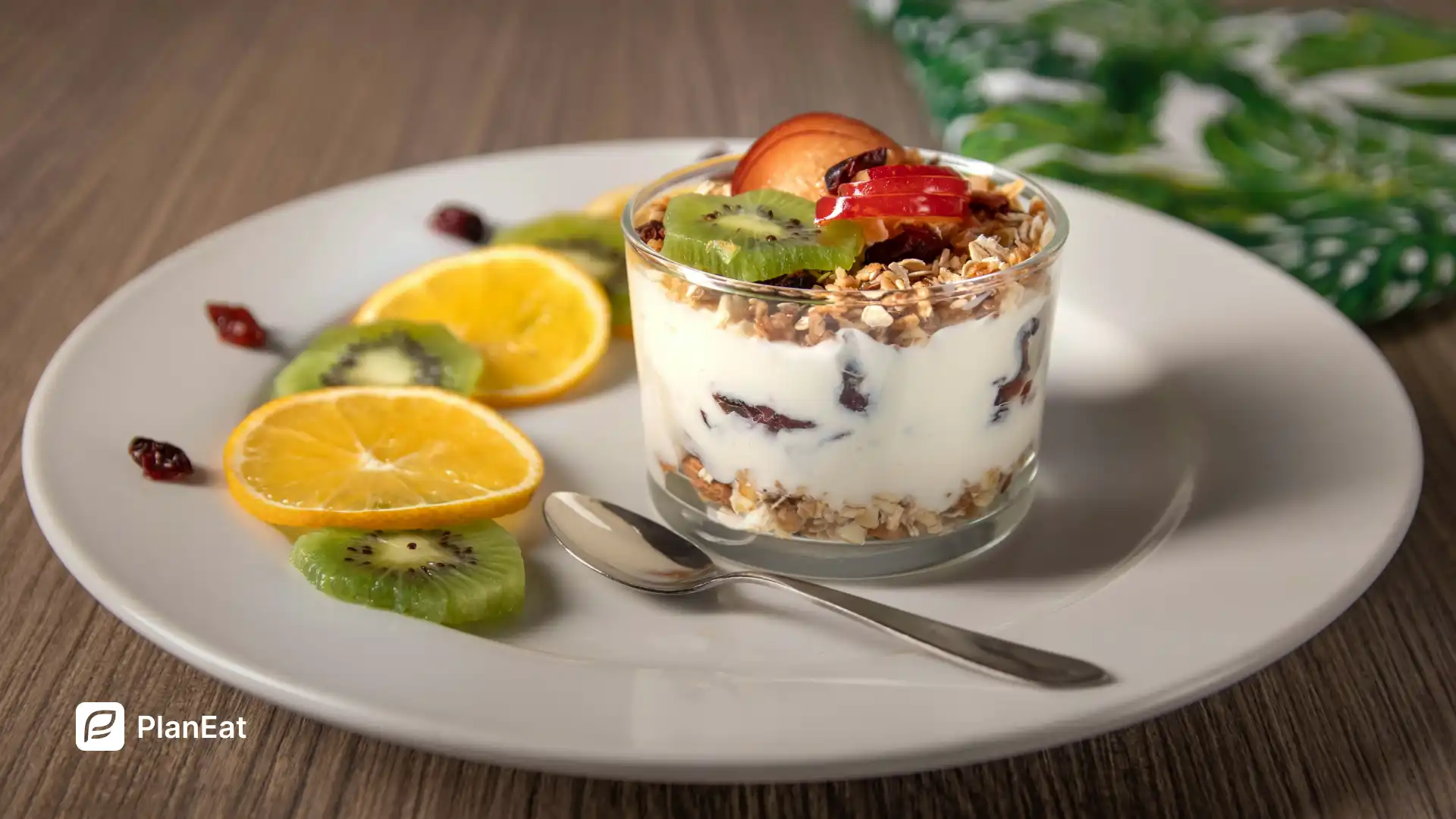
Layer 170 g yogurt and 80 g berries in a container, with 15 g rolled oats packed separately. Add the oats at serving. You can use granola instead, but its sugar, calories, and portion weight depend on the product; the shopping example below uses oats.
Mix 170 g yogurt with a pinch of dried dill and 5 ml lemon juice, then serve with 50 g cucumber and 60 g carrot sticks. Keep the vegetables separate from the dip until eating. Add pepper to taste; use plain yogurt rather than a sweet vanilla base.
Stir a pinch each of garlic powder and dried herbs into 170 g yogurt with 5 ml lemon juice. Serve with 30 g whole-grain crackers and 100 g cucumber. Pack crackers separately. This has a different ingredient total from the vegetable-only dip, even though the yogurt portion is the same.
Spread 340 g yogurt on a parchment-lined freezer-safe tray, add 160 g berries and 10 g seeds, and freeze until firm. Divide the batch into two portions: each represents 170 g yogurt, 80 g berries, and 5 g seeds. Freeze the pieces in a covered container and serve frozen; freezing changes the texture, so do not expect soft-serve ice cream.
For other protein foods when you want a break from yogurt, browse these high-protein snack ideas without bars or shakes. For the bigger daily picture, see how protein, carbs, and fats fit into meals.
Choose bowl 1, cup 2, swirl 4, parfait 5, and dip 6 for one example workweek. You can change the order. The list counts each of those once; mango, coconut, crackers, and bark ingredients are excluded because they are alternatives, not additional snacks.
| Ingredient | Amount used for five snacks |
|---|---|
| Plain Greek yogurt | 850 g: 5 × 170 g |
| Berries | 160 g: 2 × 80 g |
| Apple | 80 g edible portion |
| Banana | 60 g peeled |
| Rolled oats | 30 g: 2 × 15 g |
| Walnuts | 10 g |
| Peanut butter | 10 g |
| Cucumber | 50 g |
| Carrot | 60 g |
| Lemon juice | 5 ml, plus a pinch of dill and cinnamon for their respective snacks |
If you buy a 1 kg yogurt tub, these five portions leave 150 g. A 200 g berry pack leaves 40 g; use the remainder elsewhere rather than quietly increasing the listed snack amounts. Package sizes vary, so compare what you need with what the shop sells. The fruit quantities are amounts eaten, not promises that one apple or banana weighs exactly that much.
Check the cupboard before buying a whole new bag of oats or nuts for a few spoonfuls. Our grocery-list structure guide helps organize what you need to purchase after checking what is already at home.
If snack ingredients keep getting missed when you plan meals, add those portions to the same weekly list. You can use PlanEat AI on the App Store to help organize your meal-planning routine.
Planning five snacks does not mean mixing all five on Sunday and promising they will remain suitable until Friday. Follow the yogurt's storage directions and the condition of each ingredient. Keep most yogurt in its original container, use clean utensils, and assemble only the next small batch. Cut fruit and add crunchy toppings close to eating for better texture.
The FDA's food-storage guidance recommends refrigeration at 40°F / 4°C or below. Carry yogurt in an insulated bag with ice packs if refrigeration is unavailable, keeping it properly chilled. Perishable food should not remain at room temperature longer than two hours, or one hour above 90°F / 32°C. These limits do not extend the life of a product that was already stored incorrectly.
If your desk has no fridge and you cannot keep the snack chilled, choose a suitable shelf-stable option instead. For more general planning ideas, read our guide to choosing snacks between meals. A snack can help bridge meals, but no yogurt combination guarantees a particular energy level or appetite response.
Try berries and walnuts, apple and oats, banana and peanut butter, or cucumber and herbs. Start with one combination and add crunchy toppings just before eating. The portions above are starting points you can adjust.
The examples use 170 g of plain Greek yogurt per serving so the shopping arithmetic stays consistent. This is an example portion, not a prescribed amount; choose more or less for your appetite and the rest of your day.
It can contain naturally occurring milk sugar even when its label lists 0 g added sugars. Check total sugars and added sugars separately. Honey, syrup, sweetened granola, and sweetened nut butter can add more.
It depends on the yogurt, portion, and toppings. The FAGE Total 0% example cited here lists 18 g protein per 170 g yogurt serving, before toppings. Use the label on your own product for the finished snack calculation.
Plan five portions, but keep most yogurt in its original container and assemble small batches according to its storage directions. Keep oats and nuts separate, add cut fruit near serving, and carry yogurt chilled. Planning five snacks does not establish a five-day shelf life.
Yes, if it suits you, but check the label: protein and added sugar vary substantially between products. Choose an alternative appropriate for your allergies; nut or seed substitutions also change the nutrition.
No. They are snack ideas rather than a calorie target or a promise of weight loss. Consider the complete snack, including toppings, alongside your usual meals and individual needs.
Choose a yogurt you enjoy, measure the toppings when accuracy matters, and plan the ingredients alongside your meals. Keep the snack chilled and use your product label for nutrition.