
October 2, 2026
Learn what macros are, how much protein, carbs, and fat beginners usually need, and how to turn simple macro ranges into real meals and weekly plans.
TL;DR: Macros are the protein, carbohydrates, and fats that make up your calories. You do not need perfect tracking to benefit from them. A simple daily range for each macro, a few balanced meals you repeat, and a basic weekly plan can already help you feel fuller, keep more muscle, and make steady progress.
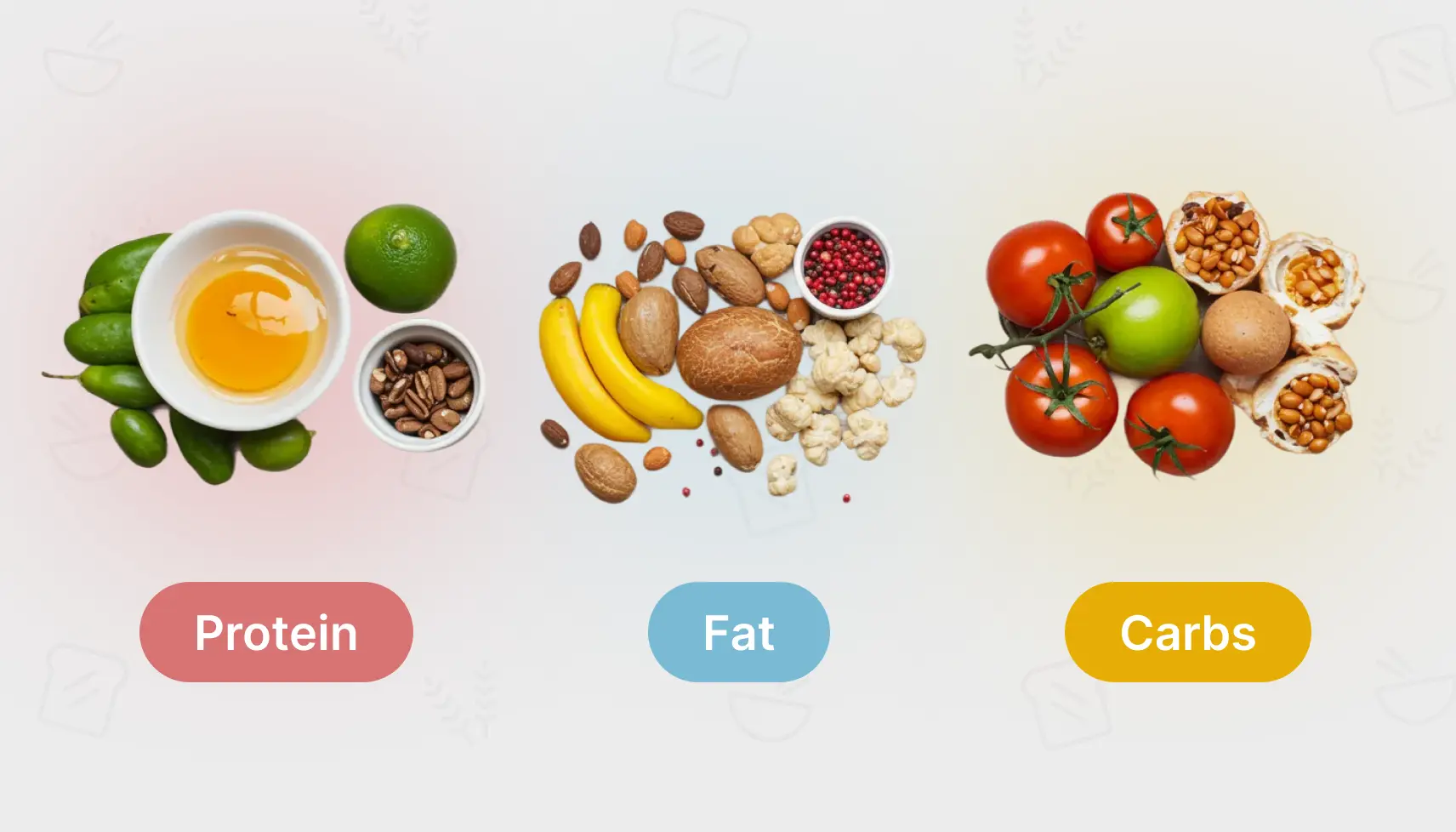
Macros, or macronutrients, are the big nutrients that provide energy:
Each has a different role.
Protein helps build and maintain muscle, supports your immune system, and increases fullness after meals. Carbohydrates are the body’s preferred quick energy source, especially for your brain and workouts. Fats support hormone production, brain health, and help you absorb certain vitamins.
Macros also carry calories:
You can lose, gain, or maintain weight at many different macro splits as long as calories change. The reason macros still matter is that they strongly affect how full you feel, how you perform, and how easy it is to stick to your plan.
Before you go into numbers, it helps to see how a balanced meal looks on a plate. For a simple visual starting point, you can use Healthy Eating Basics: Build a Balanced Plate and then let macros sit inside that structure.
Before looking at the menu itself, here are the guiding rules.
Macro calculators can look complex, but you do not need a perfect formula to get a useful starting point.
These are general guidelines for healthy adults without specific medical conditions. They are not medical advice.
For many people, a reasonable daily macro range looks like this:
If you are focusing on weight loss or strength training, protein may sit closer to the higher end of its range, while carbs and fats adjust slightly downward.
You do not have to hit exact percentages every day. Think of these ranges as a target zone that keeps you close to a balanced pattern over time.
If you want a clearer protein target that matches weight loss goals, you can combine this overview with Protein Goals for Weight Loss (Simple Calculator) and then let carbs and fats fill in the remaining calories.
If you prefer to see macros inside real meals instead of only as percentages, you can use PlanEat AI to generate a weekly meal plan with basic calories and macros plus a grouped grocery list based on your goals, dislikes, and cooking time. Then you simply check that your days roughly land inside your macro ranges instead of tracking every gram forever.
Macro targets only help if they show up in your breakfasts, lunches, and dinners.
Instead of putting almost all your protein at dinner, aim for smaller amounts in most meals, for example:
This pattern supports fullness and muscle better than one very large protein hit.
Give carbohydrates a clear role:
Instead of avoiding fat or letting it dominate the plate, aim for small amounts:
When you combine all three macros in a meal, you usually end up close to a balanced plate: protein, colorful vegetables or fruit, a smart carbohydrate source, and a little healthy fat.
For a full week of meal ideas that follow this kind of structure, you can look at 7-Day Balanced Meal Plan (With Grocery List) and notice how each day repeats balanced patterns instead of chasing perfect numbers.
You do not need a totally new macro split for every goal, but small shifts can help.
This gives you flexibility while keeping meals balanced.
In practice, that often means:
You can connect these ideas with 7-Day Weight Loss Meal Plan (With Shopping List) if you want to see a full week that applies them to breakfasts, lunches, and dinners.
Exact numbers vary depending on how often and how hard you train, but the pattern of protein plus carbs around workouts and balanced meals the rest of the day works for many people.
If you have medical conditions such as diabetes, kidney disease, or specific dietary needs, macro targets should be set with a doctor or registered dietitian.
Not everyone needs to track macros in an app.
For a deeper look at how tracking and planning can work together, instead of choosing only one side, you can read Calorie Counting vs Meal Planning: What Works Better?.
If you decide to lean on structure more than constant tracking, you can keep your favorite macro friendly meals and weekly patterns in PlanEat AI. The app uses your goals, dislikes, and cooking time to build new weeks around the same protein, carb, and fat structure, so you can focus on cooking and eating instead of rebuilding the plan each time.
No. Many people eat in a balanced way without ever tracking. Macro awareness is a tool, not a requirement. If you focus on including protein, vegetables or fruit, smart carbohydrates, and some healthy fats in most meals, you are already close to a balanced pattern.
Calories drive weight change over time, while macros influence fullness, performance, and how easy it is to stick to your plan. Both matter, but if your main goal is weight loss or gain, calories are the base and macros help you manage that base more comfortably.
Both can work if they help you create a calorie deficit you can maintain. Some people feel better with moderately lower carbs and higher protein, others prefer a moderate carb approach. Your best choice is the one that fits your medical needs, preferences, and lifestyle.
Look at several weeks, not days. If your energy, hunger, and digestion feel reasonable and your weight or performance moves in the direction you want, your macro split is likely good enough. If you feel constantly tired, very hungry, or stuck, adjust one variable at a time and reassess.
Some people like slightly more carbohydrates around workouts and slightly less on rest days, while keeping protein steady. This can help with energy and recovery, but it is an optional fine tuning step, not a rule for everyone.
Educational content only - not medical advice.
Learn what macros are, how much protein, carbs, and fat beginners usually need, and how to turn simple macro ranges into real meals and weekly plans.