
July 30, 2026
Learn which foods support an anti-inflammatory eating pattern, which ones to limit, and how to build simple meals you can repeat.
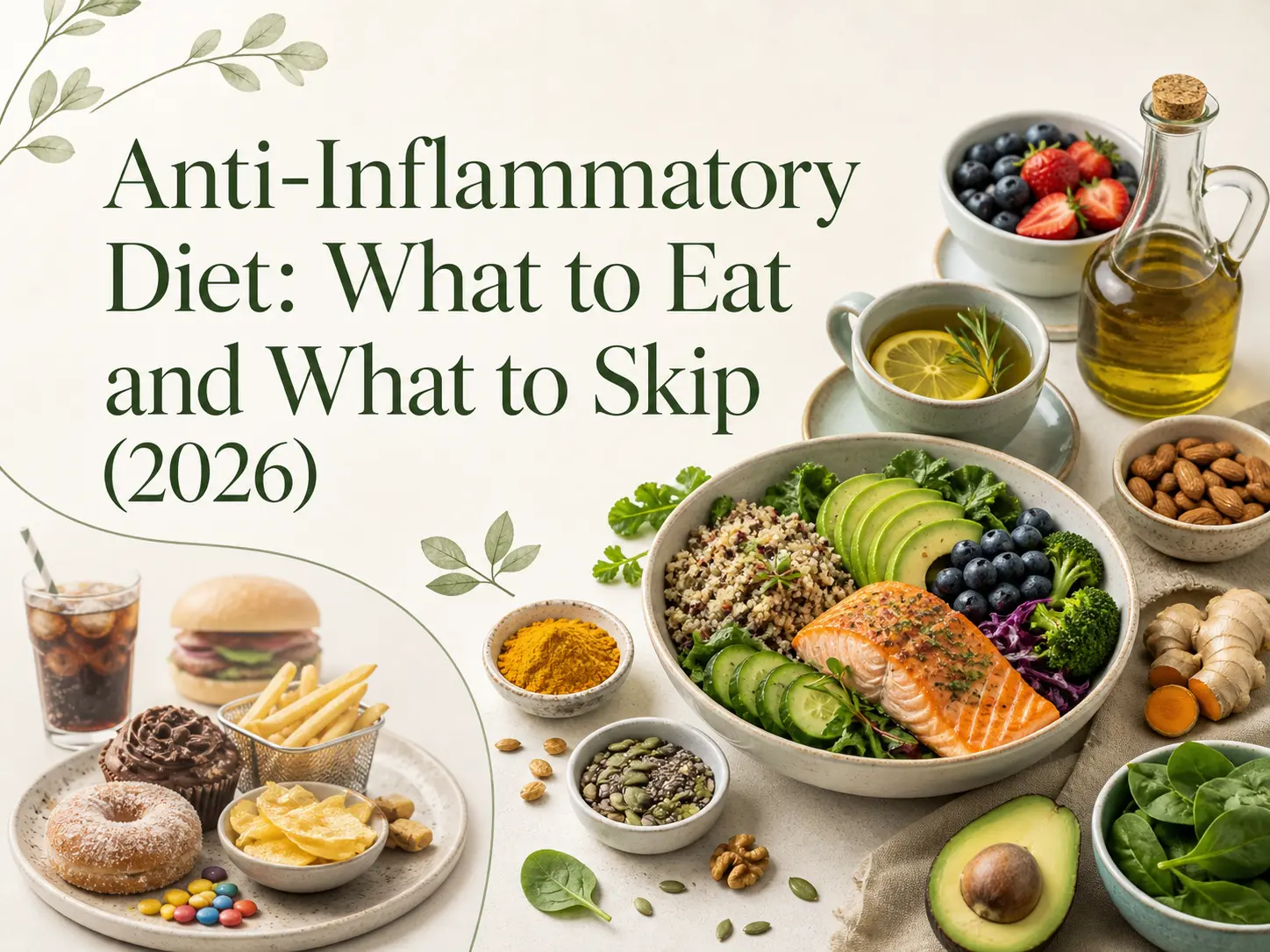
An anti-inflammatory diet is less about one miracle food and more about the overall pattern of what you eat most days. The practical goal is to build meals around whole foods, steady protein, fiber-rich carbs, and healthy fats while cutting back on the foods that crowd those out.
A useful starting point is the same balance used in healthy eating basics: half the plate produce, a quarter protein, and a quarter starch or whole grain. That framework keeps meals simple and repeatable without needing to track every bite.
If you want an easy way to turn that into a weekly routine, a meal structure from a default weekly menu template can help you reuse breakfasts, lunches, and dinners instead of starting from scratch every day.
If you want a simpler way to turn anti-inflammatory eating into a repeatable weekly routine, PlanEat AI can help you organize the week with realistic meals, a grouped grocery list, and practical swaps based on your goals, dislikes, and cooking time. That makes it easier to eat in a more balanced way without overcomplicating the process.
Build most meals around vegetables, fruit, beans, lentils, oats, brown rice, potatoes, nuts, seeds, olive oil, eggs, yogurt, fish, tofu, and other minimally processed proteins. These foods are filling, easy to mix and match, and work well in meals you can prep ahead.
Many people do best when they keep a few dependable staples on hand. A practical high-fiber grocery list can make this easier, especially if your meals often include beans, berries, leafy greens, whole grains, and seeds.
Use simple combinations like salmon with rice and broccoli, yogurt with berries and oats, or lentil bowls with olive oil and roasted vegetables. If you need quick ideas for packed meals, these quick healthy lunch ideas fit the same pattern.
You do not need to ban foods to follow an anti-inflammatory pattern, but it helps to limit ultra-processed items that are high in added sugar, refined starches, and industrial oils and low in fiber. Think pastries, candy, soda, chips, fast-food combos, and many packaged snacks.
Also watch the “healthy-looking” foods that are still mostly sugar or refined flour. Reading labels matters here, so a refresher on how to read nutrition labels can help you spot low-fiber, high-sugar products that do not keep you full for long.
For many people, the biggest win is not perfection. It is simply replacing a few daily convenience foods with better defaults, which is easier when you already know your go-to meals and snacks.
Start with a repeatable formula: protein + colorful produce + high-fiber carb + healthy fat. That could be chicken, tofu, or beans with vegetables, potatoes, oats, or whole grains, plus olive oil, avocado, nuts, or seeds. The pattern is flexible enough for home cooking, leftovers, or grab-and-go meals.
If you want a faster system, use a short list of meals you actually enjoy and rotate them through the week. A simple meal planning basics approach is often enough to keep your food choices consistent without feeling restrictive.
For busy weeks, combine frozen vegetables, canned beans, microwave rice, and a quick protein source. If that sounds familiar, the strategies in low-effort healthy eating that still works can help you build meals with less prep and fewer decisions.
Is an anti-inflammatory diet the same as a Mediterranean diet?
They overlap a lot. Both emphasize vegetables, fruit, whole grains, legumes, olive oil, nuts, and seafood.
Do I need to avoid all sugar?
No. The main goal is to limit added sugar in everyday foods and drinks, not to remove every sweet food completely.
What is the easiest anti-inflammatory breakfast?
Try Greek yogurt with berries and oats, eggs with vegetables, or oatmeal with nuts and fruit.
Can I follow this diet on a budget?
Yes. Beans, oats, eggs, frozen vegetables, canned fish, and seasonal produce can keep costs lower.
What should I do first if I want to start today?
Pick one meal to improve, stock 5 to 10 staple foods, and repeat a simple meal pattern for the next week.
How can I stay consistent when I am busy?
Use a short rotation of meals and keep backup foods ready. A tool like PlanEat AI on the App Store can help you turn that into a repeatable plan.
An anti-inflammatory diet is easiest when you treat it like a meal pattern, not a strict list of rules. Focus on whole foods, fiber, and protein first, then reduce the ultra-processed foods that crowd out better options. Small repeatable changes usually work better than trying to overhaul everything at once.