
October 2, 2026
Clear comparison of calorie counting and AI meal planners, including pros, cons, and real world examples, so you can decide which approach fits your goals, energy, and everyday routine.
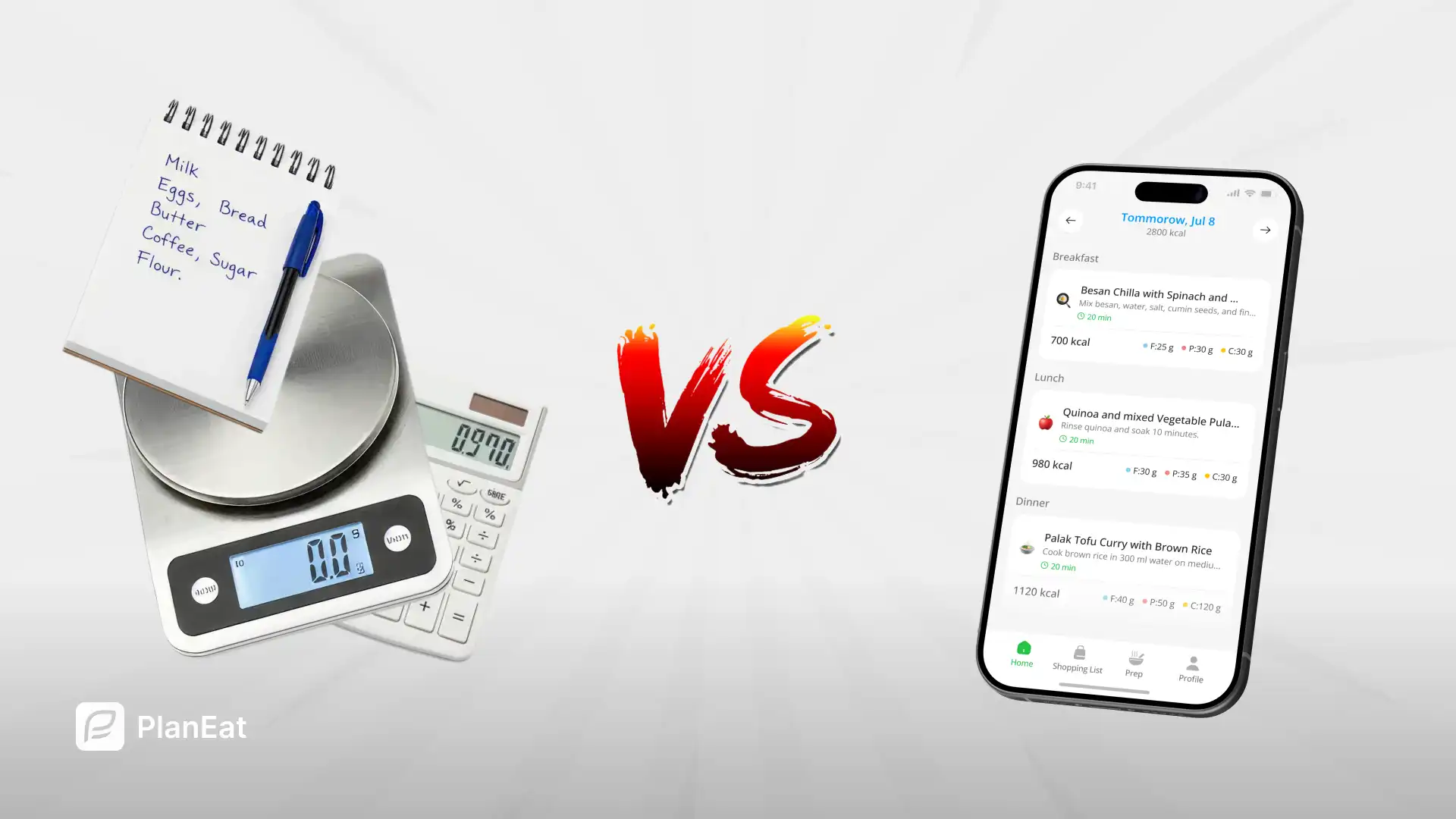
TL;DR: Calorie counting and AI meal planners solve different problems. Counting calories gives you precise numbers and tight control, but it costs time and attention every day. An AI meal planner builds weekly menus and grocery lists from your goals and preferences so you focus on following a realistic plan instead of logging every bite. This guide explains what each method actually does, when it helps, when it backfires, and how to decide which approach fits your life right now.
Before you pick a side, it helps to understand what each tool is designed to do.
Both tools can support weight, health, or energy goals, but they ask for different types of effort. If you want a broader view of how AI planning works under the hood, you can read How AI Helps Meal Planning (Personalized Menus & Lists) as a deeper explanation of how menus and grocery lists are generated from your inputs.
If you prefer planning once rather than logging several times a day, you can use PlanEat AI as your AI meal planner. It creates a personalized weekly menu and a grouped grocery list based on your goals, dislikes, and cooking time so you spend most of your effort cooking from the plan, not entering data.
Calorie counting can be a powerful tool when used in a focused, time limited way.
A realistic way to use calorie counting is as a learning phase, not a forever habit. Once you have a sense of your ranges, you can shift focus to planning balanced meals and checking in with numbers less often.
AI meal planners aim to reduce decision fatigue and make it easier to follow a realistic structure week after week.
If you want to see how AI planners compare across iOS apps, including features like personalization and grocery lists, you can look at Best AI Meal Planner Apps for iPhone (iOS, US 2025) as a companion overview.
For many people, though, a weekly plan that is realistic for their schedule already solves the biggest pain point: not knowing what to cook and buy.
It can help to treat this as a decision between two starting tools, not two opposing camps.
You do not have to guess forever. You can also experiment. For a week or two, try one approach and note how it affects your stress, time, and eating. Then try the other.
If you want to zoom out and compare these styles in more general terms, you can also read Calorie Counting vs Meal Planning: What Works Better which looks at the same question from a pattern and mindset perspective.
You do not have to choose one tool for life. Many people use both at different times or in different ways.
Once you find a few weekly patterns that work in PlanEat AI, you can save them as reusable plans and simply adjust details when your schedule changes. That way, your main structure and grouped grocery list stay stable while you decide how often, if at all, you want to add short phases of calorie counting on top.
It can be easier to see the difference between calorie counting and AI planning in a concrete example.
This is useful when your main question is "How much am I actually eating."
This is useful when your main question is "What should I eat this week that fits my routine."
Over time, you might use a few weeks of calorie counting to set expectations, then rely on AI planning and simple visual guides for most of the year. For a basic visual reminder of what balanced meals look like inside those plans, you can use Healthy Eating Basics: Build a Balanced Plate as a reference.
Not for everyone. Calorie counting can give more precise numbers, which helps some people, especially in the short term. AI meal planners can make it easier to eat balanced meals consistently without constant logging. The better option is the one you can follow for months without burning out.
For many people, yes. A realistic weekly plan built around balanced meals, enough protein, and mostly unprocessed foods can support weight goals even without logging every calorie. An AI planner helps by reducing last minute decisions and reliance on takeout or random snacks.
You can. One common pattern is to use an AI meal planner for structure and then log those planned meals in a tracker for a short period. That gives you both numbers and a plan, but it is usually better to keep this combined phase time limited to avoid burnout.
If logging and checking numbers makes you feel guilty, stressed, or out of control, that is a sign to step back. You might do better with a planning first approach, focusing on simple patterns and visual guides instead of detailed tracking. If anxiety is strong or persistent, it is important to bring this up with a health professional.
AI planners are not a replacement for medical advice. They can help with structure and ideas, but they do not know your full medical history. If you have conditions that require strict control of nutrients, allergies, or interactions, you should work with a clinician and follow their guidance.
Educational content only - not medical advice.
Clear comparison of calorie counting and AI meal planners, including pros, cons, and real world examples, so you can decide which approach fits your goals, energy, and everyday routine.