
October 2, 2026
Use this female recomp meal plan to balance protein, calories, lifting support, grocery prep, and realistic fat-loss habits without extremes today too.

If your goal is to build muscle while losing fat, the best place to start is not with a drastic diet. It is with enough protein, consistent strength training, and a plan you can repeat on busy weeks.
This guide breaks down a realistic meal plan for muscle gain and fat loss female readers can actually use in 2026, with a 7-day menu, simple swaps, and a grocery list built for US grocery stores.
For deeper nutrition context, start with nutrition science basics and this guide to protein goals for weight loss.
Female body recomposition meal plan strategies work best when the goal is to support muscle growth without overeating. In practice, that means lifting weights several times per week, eating enough protein, and keeping calories around maintenance or in a modest deficit if fat loss is the priority.
This is not the same as aggressive cutting. If calories drop too low, training performance often falls, recovery slows, and it gets harder to build or keep muscle. For a simple overview of how food changes with exercise days, see eating for rest days vs training days.
A useful rule is to center every meal around lean protein, then build the rest of the plate from vegetables, fruit, grains, potatoes, beans, dairy, nuts, or oils based on hunger and training load. If you want a more intuitive method, portion control made easy can help you keep meals consistent without weighing everything.
Protein is the main nutrition lever, but it is not the only one. Carbs help fuel training sessions, and fats help meals feel satisfying. The sweet spot is usually a steady intake of all three, not a low-carb crash phase.
Sleep, stress, and weekly consistency matter too. Poor sleep can increase hunger and reduce training quality, which is why sleep and hunger deserves attention if your progress has stalled.
This 7 day recomp meal plan is built around simple meals you can repeat, prep, and swap. Use it as a template, not a rigid rulebook.
Each day includes breakfast, lunch, dinner, and one or two snacks. Portions can be scaled up for larger athletes or scaled down for smaller appetites, but keep protein steady whenever possible.
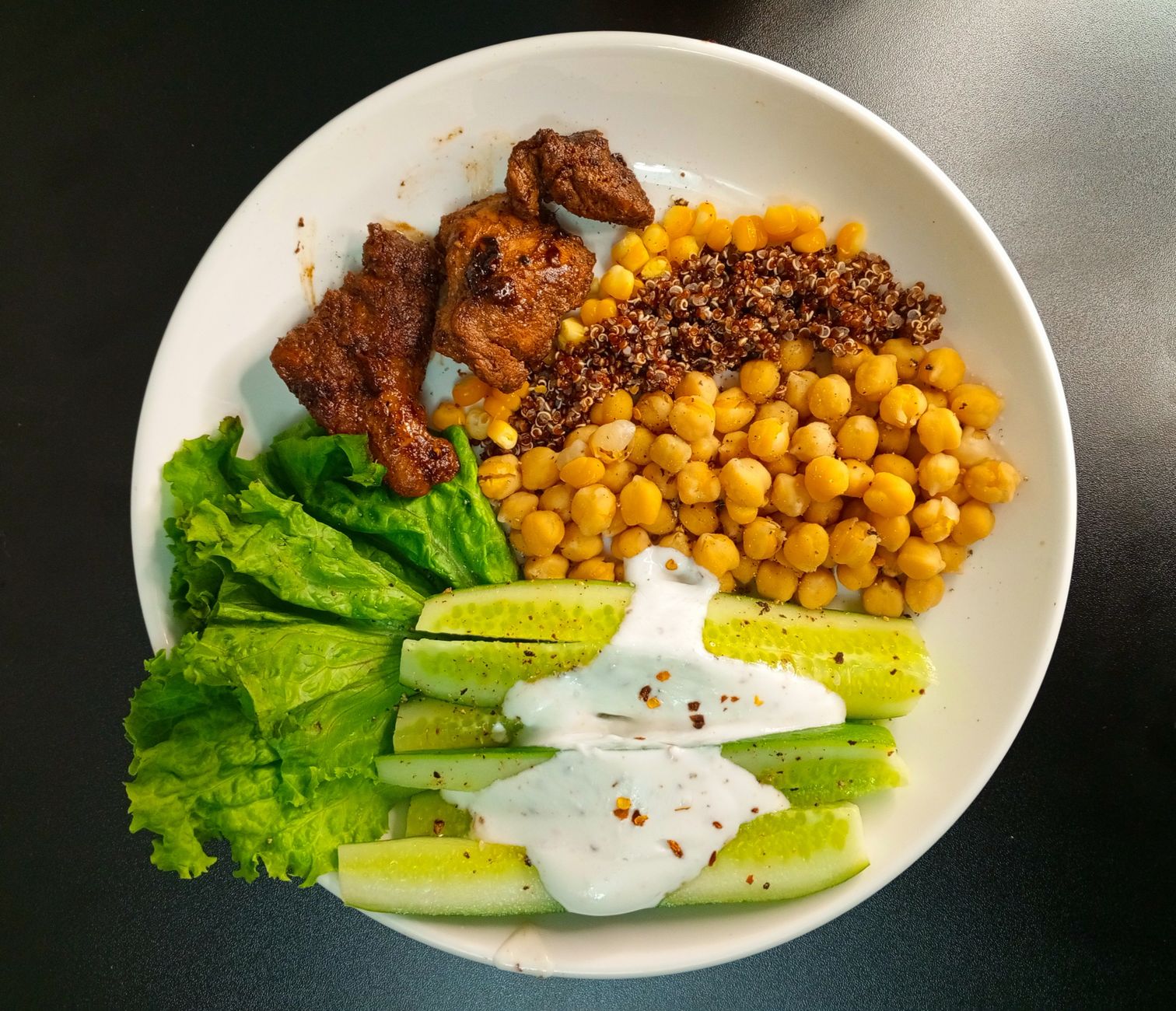
A practical sample day might look like this: breakfast with eggs, toast, and fruit; lunch with chicken, rice, and veggies; dinner with salmon, potatoes, and salad; plus a yogurt snack after training. If you train later in the day, training at night can help you time meals better.
For a higher-protein structure, compare this menu to a high protein meal plan for women and adjust portions until you feel fueled but not stuffed.
The easiest way to make fat loss muscle gain meals sustainable is to repeat a template. Build most plates with one palm or more of protein, one to two fists of produce, one cupped hand of carbs, and one thumb of fats as needed.
That template keeps meals flexible across breakfast, lunch, and dinner. It also makes grocery shopping easier because you only need a short list of core ingredients that can mix into many combinations.
If you want a fast planning system, use quick meal planning to choose two breakfasts, two lunches, two dinners, and two snacks each week. That is often enough variety without turning the plan into a full-time job.
If you like using digital planning tools, PlanEat AI on the App Store can be added to your workflow as a simple way to organize meals, but the real results still come from consistency.
On lifting days, many women do better with a slightly higher carb intake around the workout window. That can mean fruit at breakfast, rice or potatoes at lunch or dinner, or a carb-focused snack before training.
On rest days, keep protein the same and reduce carbs only if your appetite or total calorie target calls for it. For a simple comparison, this rest vs training eating guide explains when to eat more, less, or just differently.
Progress checks should focus on strength gains, waist measurements, energy, digestion, and how your clothes fit. Scale weight can move slowly during recomposition, so do not panic over small week-to-week changes.
If fat loss stalls for several weeks, first look at portions, snack creep, and weekend eating before cutting more food. If muscle gain stalls, consider whether training volume, protein intake, or sleep needs a boost.
For long-term success, pair this meal plan with a realistic training routine and use protein goals as your weekly benchmark rather than chasing perfect macros every day.
For the support habits around this plan, use protein goal planning, nutrition science basics, portion control without a scale, sleep and hunger.
For neutral background, cross-check the nutrition and planning claims with MedlinePlus guidance on dietary protein, CDC guidance on fruits and vegetables, Dietary Guidelines for Americans.
How much protein should I eat for recomp?
Most active women do well with a high-protein meal plan for women that spreads protein across meals. A common practical range is 25 to 40 grams per meal, adjusted for body size and training load.
Should I be in a calorie deficit or maintenance?
For a female body recomposition meal plan, maintenance or a small deficit usually works best. Bigger deficits can make training harder and slow recovery.
Can I build muscle and lose fat at the same time?
Yes, especially if you are new to lifting, returning after a break, or improving your diet structure. The key is steady strength training, enough protein, and patience.
Do I need supplements?
Not necessarily. Food first is usually enough, though some people use protein powder to make daily protein targets easier to hit.
What if I get hungry at night?
Add more protein, fiber, or volume at dinner, and make sure your daytime meals are not too small. Hunger often improves when meals are more balanced and sleep is steady.
How long before I see changes?
Many people notice workout performance changes first, then body composition changes over several weeks. Take photos and measurements so you do not rely on the scale alone.
A meal plan for muscle gain and fat loss works best when it is simple, high in protein, and matched to your training schedule. Keep the plan flexible, track performance as well as body changes, and adjust portions slowly. Consistency matters more than perfection, especially for recomposition.