

September 8, 2026
Start a Mediterranean-style first week with simple meals, grocery staples, and practical swaps that make healthy eating easier.
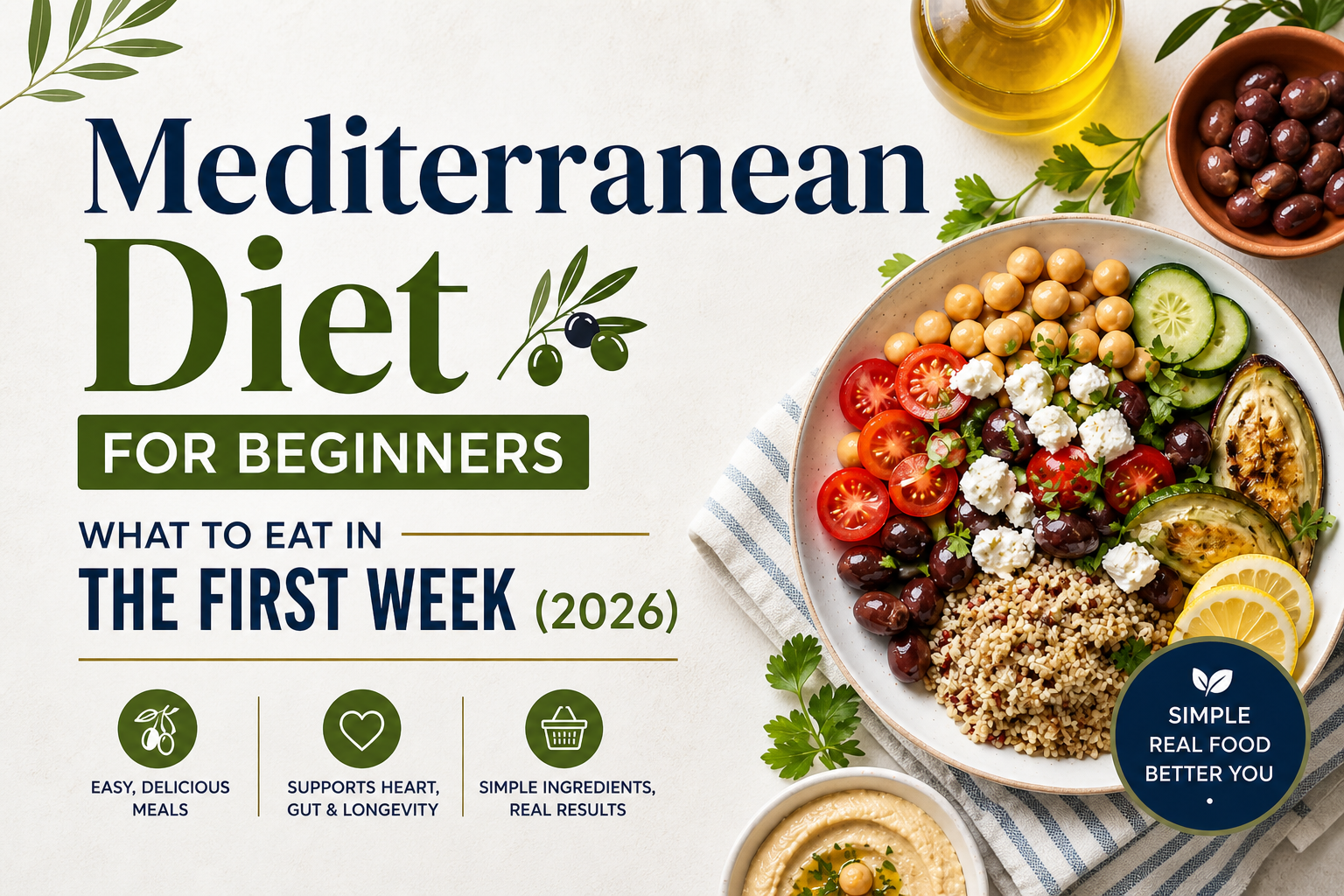
Start With the Right Mediterranean Diet Basics
The first week works best when you keep the focus on simple structure, not perfection. Build meals around vegetables, fruit, beans, whole grains, olive oil, fish, yogurt, nuts, and herbs, then repeat what feels realistic.
If you want a simple reference point for balanced meals, start with healthy eating basics and use that as your template. The goal is to make breakfast, lunch, and dinner feel repeatable, not complicated.
A good beginner plan also uses foods you already buy. If you are trying to reduce decision fatigue, a simple weekly framework from how to build a weekly meal plan can help you map out meals before the week starts.
If you want a simpler way to turn Mediterranean-style eating into a repeatable weekly routine, PlanEat AI on the App Store can help you organize the week with realistic meals, a grouped grocery list, and practical swaps based on your goals, dislikes, and cooking time. That makes it easier to keep meals balanced and consistent without overcomplicating the process.
Keep your first week practical by choosing familiar meals with a Mediterranean pattern. That usually means oats with fruit and nuts, Greek yogurt with berries, salads with beans or tuna, grain bowls, roasted vegetables, and simple dinners with fish, chicken, lentils, or tofu.
For meal ideas that fit this style, look at healthy vegetarian lunches and healthy dinner ideas. You do not need special recipes every day; a few strong staples are usually enough to cover the week.
A short grocery list reduces waste and makes shopping easier. Start with olive oil, oats, rice or farro, canned beans, tomatoes, cucumbers, spinach, onions, garlic, apples, berries, yogurt, eggs, nuts, and one or two proteins you already like.
If budget matters, pair this approach with healthy eating on a budget tips and seasonal grocery shopping. Seasonal produce and pantry staples make the plan cheaper and easier to repeat.
To keep meals simple, make small swaps instead of changing everything at once. Use olive oil instead of heavy sauces, fruit instead of dessert-heavy snacks, and beans or lentils a few times a week in place of more processed proteins.
If you want a real starting point, try a short rotation before building a full week. Repeating a few easy meals helps you learn what you like and keeps shopping predictable.
This is especially useful if you usually abandon plans midweek. A simple structure like a 3-day meal rotation can make the first week feel manageable without needing a full recipe list every day.
Breakfast: Greek yogurt, berries, and walnuts. Lunch: chickpea salad with cucumber, tomato, olive oil, and pita. Dinner: salmon, rice, and roasted broccoli.
Breakfast: oats with sliced apple and cinnamon. Lunch: turkey or hummus wrap with greens. Dinner: lentil soup, bread, and a side salad.
Breakfast: eggs, toast, and fruit. Lunch: tuna grain bowl with olives, cucumber, and greens. Dinner: chicken, potatoes, and roasted vegetables.
The easiest way to keep going is to repeat what worked and only change one or two meals at a time. If you enjoyed the first week, build a second week from the same food categories instead of starting over from scratch.
For extra support, use a planner that can turn your preferences into a workable menu and list. If you want help organizing meals fast, PlanEat AI on the App Store can be one option to test, but the main habit still comes from keeping your plan simple and realistic.
It also helps to track what felt easy, what felt boring, and what took too long. That way your next week becomes more useful than the last one, which is how meal planning starts to feel natural.
What is the easiest Mediterranean meal to start with?
Greek yogurt with fruit, oats with nuts, or a simple chickpea salad are all easy first-week choices.
Do I need to count calories on a Mediterranean diet?
No. Many beginners do better by using meal structure, portion awareness, and consistent grocery staples.
Can I eat Mediterranean-style meals on a budget?
Yes. Beans, oats, rice, lentils, eggs, and seasonal produce keep costs reasonable.
How many meals should I plan for the first week?
Start with 3 breakfasts, 3 lunches, and 3 dinners you can repeat or mix and match.
What if I do not like fish?
Use beans, lentils, eggs, yogurt, tofu, or chicken instead and keep the same vegetable and grain pattern.
Should beginners buy special Mediterranean ingredients?
No. Olive oil, beans, whole grains, vegetables, fruit, and yogurt are enough to start.
Your first week does not need to be fancy to be effective. Focus on a few repeatable meals, a short grocery list, and simple swaps that fit your normal routine. If the plan feels easy to follow, you are much more likely to keep using it next week.