

September 8, 2026
Easy Mediterranean breakfast ideas with simple ingredients, prep shortcuts, and practical swaps for busy mornings and better meal planning.
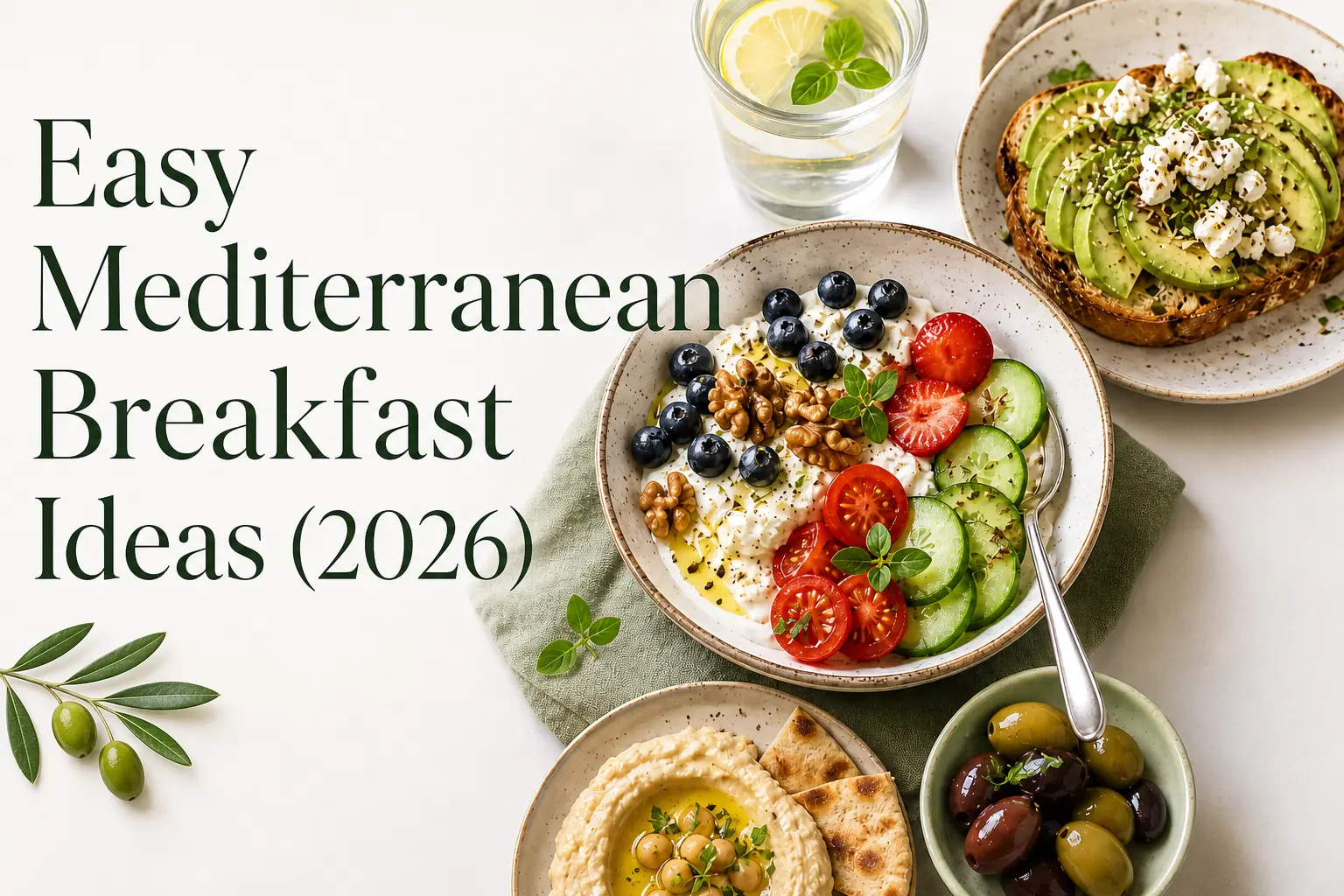
Mediterranean-style breakfasts are built around simple staples: yogurt, eggs, oats, fruit, olives, nuts, tomatoes, herbs, and whole-grain bread. That makes them easy to assemble without a long ingredient list or a complicated cooking routine.
If you already use a weekly menu, these meals fit well into a repeatable system. For a broader starting point, see Mediterranean Diet for Beginners: What to Eat in the First Week (2026) and Healthy Eating Basics: Build a Balanced Plate.
The goal is not to make breakfast fancy. The goal is to make breakfast reliable, filling, and easy to repeat on weekdays. A simple mix of protein, fiber, and healthy fats usually does the job.
Some mornings call for a five-minute meal, while others allow a little prep the night before. The ideas below cover both, so you can choose what fits your schedule.
If you want a simpler way to turn Mediterranean-style breakfasts into a repeatable weekly routine, PlanEat AI on the App Store can help you organize the week with realistic meals, a grouped grocery list, and practical swaps based on your goals, dislikes, and cooking time. That makes it easier to keep breakfast reliable, filling, and easy to repeat on busy mornings.
A small Mediterranean breakfast pantry makes weekday decisions faster. Keep a few versatile foods ready, and you can build different meals without starting from scratch each day.
Useful staples include Greek yogurt, eggs, oats, whole-grain toast, cucumbers, tomatoes, berries, apples, hummus, feta, olive oil, walnuts, and canned beans. For shopping support, the Mediterranean Diet Shopping List (Fridge, Freezer, Pantry, 2026) can help you organize the basics.
If you prefer lower-effort mornings, pair two items from each group and keep the recipe short. That approach also helps reduce food waste because the same ingredients can work in multiple breakfasts.
These ideas are practical, not restaurant-style. Each one uses everyday ingredients and can be adjusted for more protein, more fiber, or a lighter portion depending on your day.
If you want more high-protein morning options beyond this list, compare them with Top 10 High-Protein Vegetarian Breakfasts (2026) and Top 10 Healthy Breakfasts for Busy Mornings (2026).
To keep these meals balanced, aim for one protein source, one high-fiber carb, and one fruit or vegetable. If you want a faster template, the Build a Balanced Breakfast (Quick Templates) guide is a useful companion.
The fastest breakfasts usually come from prep, not from cooking skill. Wash fruit, portion nuts, boil eggs, and chop vegetables once or twice a week so weekday meals stay easy.
Batching small tasks also makes it easier to keep breakfast consistent. If you like planning ahead, Meal Prep Basics: Beginner’s Guide to Cooking Ahead and Quick Meal Planning: Build a 30-Minute Weekly Plan can help you set up a simple routine.
Another time-saver is repeating formats instead of recipes. For example, you can rotate between yogurt bowls, toast-based meals, and egg plates while swapping toppings and produce.
If you want a more flexible system, Flexible Meal Planning Without a Strict Plan (2026) is a good next read. It shows how to keep structure without making breakfast feel rigid.
It usually emphasizes whole foods like yogurt, eggs, oats, fruit, vegetables, nuts, and olive oil. The meals are simple, filling, and easy to mix and match.
Yes. Many options need only assembly, such as yogurt bowls, toast with toppings, or oats made the night before.
Yes. They use repeat ingredients, so shopping and prep stay easier through the week. That makes them helpful for people who want a realistic routine.
Use Greek yogurt, eggs, cottage cheese, beans, or extra nuts and seeds. You can also pair fruit with a protein base instead of eating fruit alone.
Choose one assemble-only meal and prep it in under five minutes the night before. Yogurt bowls and overnight oats are usually the easiest options.
You can store meal ideas, repeat favorites, and build a weekly plan using PlanEat AI on the App Store.
Mediterranean breakfasts work best when they stay simple, repeatable, and built from a few dependable ingredients. Use the ideas above as mix-and-match templates, then keep your favorites on rotation. That approach saves time and makes healthy mornings easier to repeat.