
October 2, 2026
See how a 16/8 eating window works, compare meal schedules, and use a portion example with grocery amounts. Learn safety limits before changing your routine.
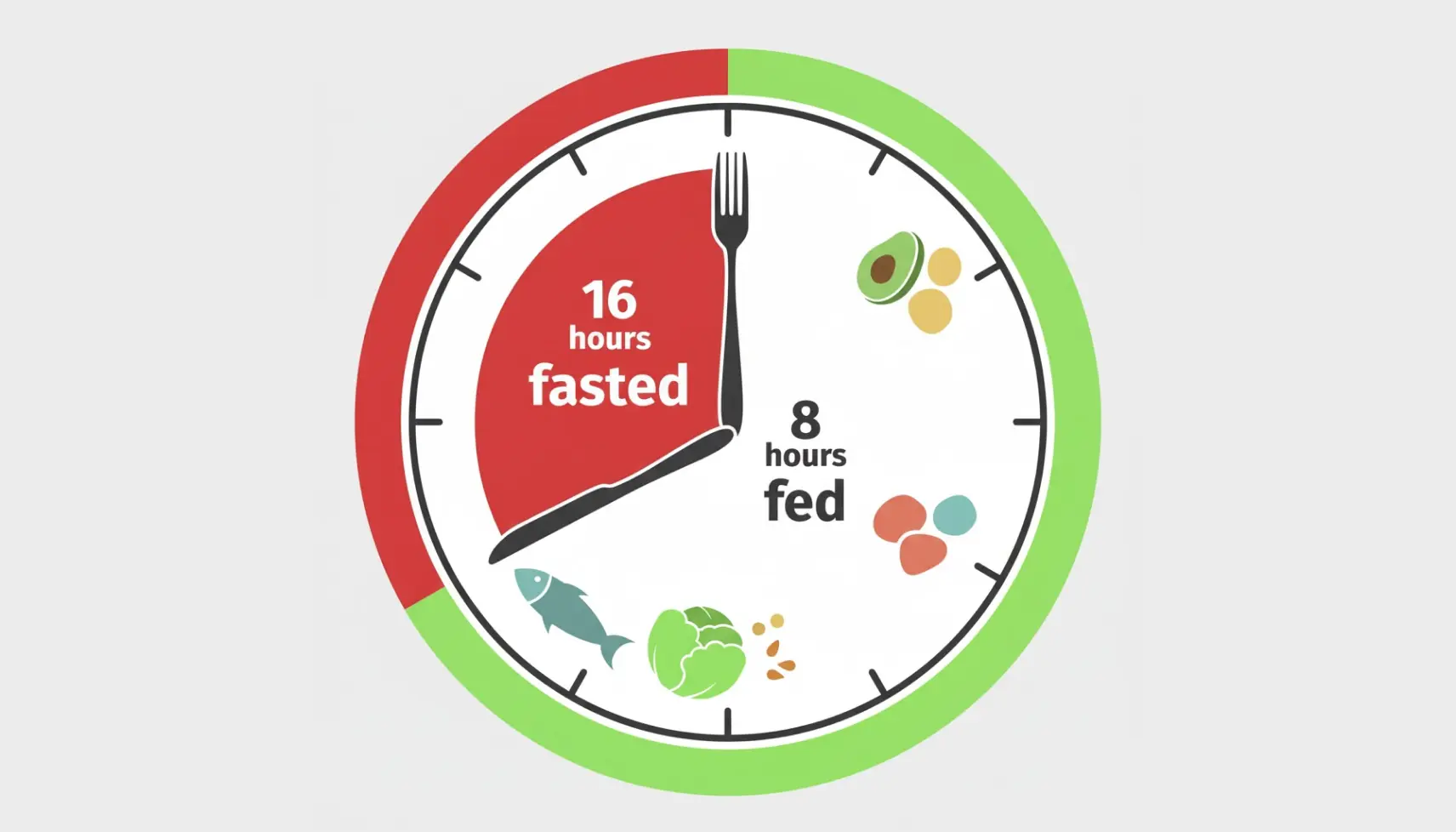
Intermittent fasting 16/8 means placing food and calorie-containing drinks inside an eight-hour eating window, with 16 hours outside it. What to eat is still ordinary balanced food: protein foods, vegetables and fruit, grains or other starchy foods, and fats. Below are two meal schedules, a measured portion example, and matching grocery quantities—not a promise of weight loss or a recommendation that everyone should fast.
This is an educational meal-planning guide for adults, not a medical treatment plan or clinician-reviewed prescription. Mayo Clinic’s fasting guidance advises discussing suitability with a healthcare professional and identifies pregnancy, breastfeeding, and eating disorders among important concerns. Do not use the example menus to start a fasting diet for a child or teen, during pregnancy or breastfeeding, or with an eating-disorder history.
If you are underweight, have a medical condition, or take medication that depends on food or meal timing, seek individualized guidance rather than adopting a schedule from a blog. The NIDDK discussion of fasting with diabetes explains risks including low and high blood glucose and the need for clinician-led planning. Do not skip, delay, or change medication yourself to fit an eating window.
Regular meals without fasting are a valid option. Persistent hunger, anxiety around food, or a schedule that prevents you from eating adequately are reasons to reassess the approach, not to become stricter.
The two numbers describe hours, not food amounts: 16 hours outside the eating window plus eight hours inside it equals a 24-hour day. Sleep is part of the overnight interval. If your last calorie-containing drink is at 8:30 p.m., count from then, not from a dinner that ended at 7 p.m.
These are clock examples, not evidence that one is best for you. Consider work breaks, family dinner, sleep, and activity before choosing any pattern. If you need an early breakfast and a late dinner, forcing both into eight hours may simply be impractical.
A shift between windows also changes the interval between days. Finishing at 8 p.m. and eating at 10 a.m. the next morning gives 14 hours, not 16. That arithmetic is not a failure requiring a compensatory fast; eating on a suitable schedule matters more than protecting a streak.
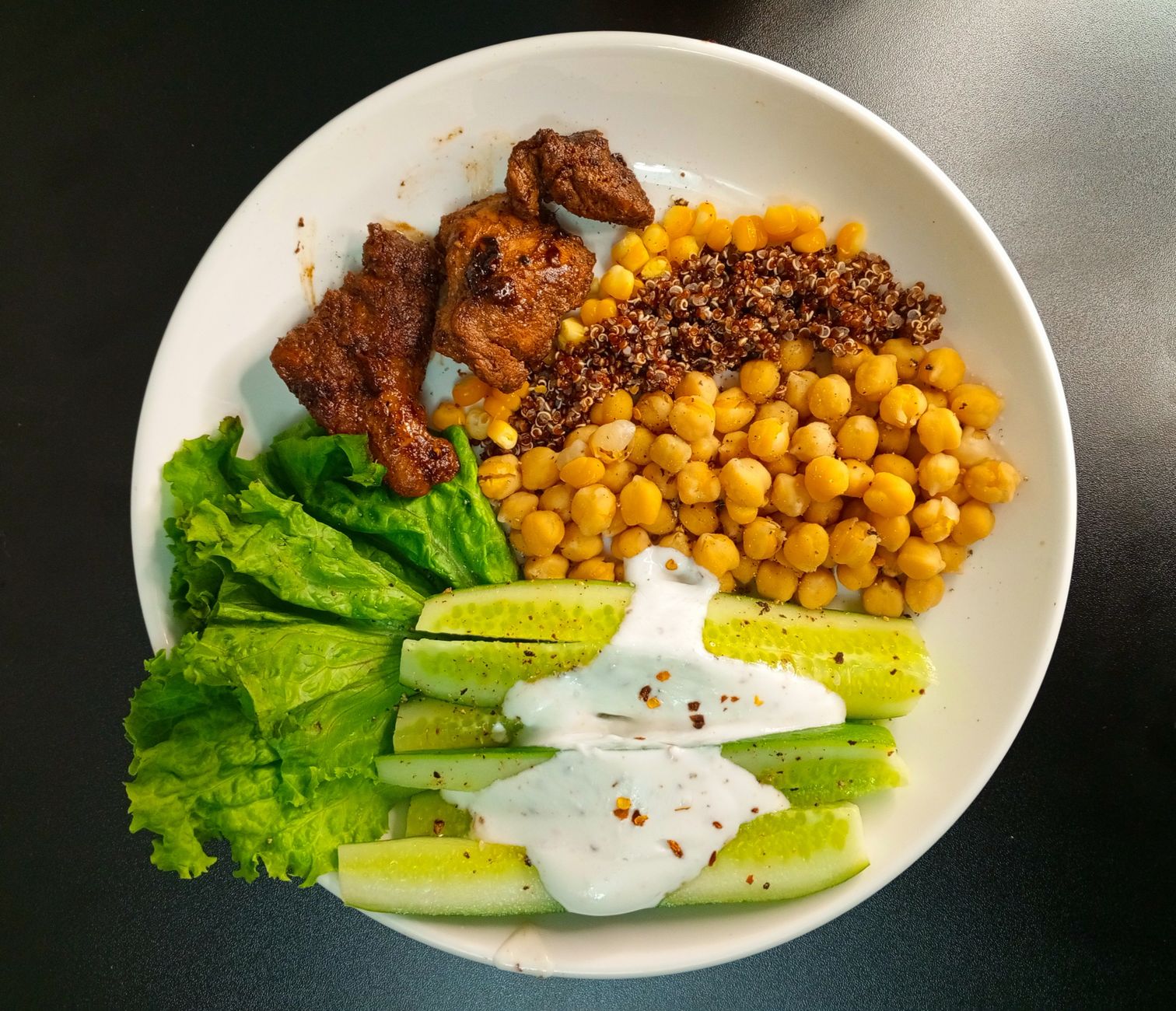
An intermittent fasting food list does not need special products. Plan meals you can prepare and enjoy. A plate or bowl can combine a protein food, a grain or starchy food, vegetables, and a little oil, nuts, seeds, or another fat; fruit and yogurt can fit wherever useful. This is a flexible meal-building pattern, not a fixed nutrient prescription.
For a visual starting point, see how to build a balanced plate. You do not need to ban an entire food group or replace a meal with coffee because the eating window is shorter. Equally, a shorter window does not make the quantity of food irrelevant.
Water, plain tea, and black coffee are commonly used outside the window in this style of time-restricted eating. Milk, sugar, cream, juice, and other calorie-containing additions belong inside the window for a strict no-calorie fast. This is not guidance for fasting before surgery, tests, or a medical procedure; follow those instructions exactly.
These schedules preserve the same three meal opportunities at different times. They are examples of placement, not required meal frequencies. Finish eating by the listed closing time if you are following that window.
If you need a snack, place it where it helps you eat adequately; it is not obligatory or forbidden. The packable lunch ideas and quick dinner templates can provide alternatives. Changes in ingredients or portions change nutrition; a food swap is not automatically equivalent.
Here is one illustrative day to make shopping arithmetic concrete. It is not a calorie-counted diet, proof of nutritional completeness, or a portion recommendation for every adult. It may be too little or too much for you. Adjust the food and timing with your needs and any qualified guidance; do not choose the amounts simply to make fasting possible.
Chicken and rice weights here are cooked. Oats are dry, potatoes are raw, tofu is drained, and fruit is the edible portion. Do not put 150 g raw rice on the list as though it equals 150 g cooked rice. Use the yield from the recipe or package you actually prepare.
Multiplying each meal by three gives the following ingredient totals. Three repetitions are a shopping exercise, not a requirement to eat the same food three days in a row or a three-day storage guarantee.
Buy raw chicken and dry rice according to the yield needed for those cooked totals, rather than assuming a universal conversion. If a tofu package states 300 g drained weight, two supply the 600 g requirement. Two packages labeled 300 g net do not establish the same drained total.
A 1 kg yogurt tub leaves 250 g after the planned 750 g use. If you already have 50 g oats, subtract them from 120 g: you need 70 g more, not another 120 g. Keep purchases, amounts used, and leftovers separate in your organized grocery list. Extra sauces or toppings must be added to it rather than silently treated as included.
If deciding on meals is the part you struggle with, you can organize that routine using PlanEat AI on the App Store. A planning tool does not determine whether fasting is medically appropriate or replace individual advice.
Choose a first meal you can assemble when your break actually starts, and pack lunch the night before if that is easier. Keep ingredients in the storage conditions required by their labels and recipes; plan fresh preparation or appropriate freezing for later meals. Scheduling a portion does not extend its safe shelf life.
For variety, change one component at a time: oats and yogurt can become eggs with toast, chicken can become a suitable bean-based dish, and potatoes can become another grain. These are food ideas, not calorie- or protein-equivalent substitutions. Recalculate purchases from the chosen recipe and yield before shopping.
If a social meal falls outside your planned window, you can decide not to follow the restricted schedule that day. Do not make up for it by skipping necessary food the next day. A simple weekly menu is useful even when you stop using 16/8.
Do not respond to persistent hunger by repeatedly shortening the window or removing meals. Review whether you are eating enough and whether regular meal timing would suit you better. Plan activity and food together rather than assuming fasted exercise is required or superior.
Mayo Clinic’s overview of benefits and risks notes uncertain long-term effects and possible symptoms such as dizziness, fatigue, and headaches. It does not establish that everyone will benefit more than with another suitable eating pattern.
If you feel dizzy, faint, confused, or otherwise unwell, stop the fast rather than pushing through to reach a target time and seek appropriate medical help. People with diabetes should follow their clinician’s glucose and emergency plan. Do not treat symptoms as proof that the routine is working.
There is no guaranteed weight-loss timeline here. Judge the routine first by whether it is appropriate, whether meals meet your needs, and whether it fits your life without distress. The clock is a planning constraint, not a health score.
Use regular balanced meals built around protein foods, vegetables or fruit, grains or other starchy foods, and fats you enjoy. The clock does not establish your calorie needs. The examples here are adjustable meal ideas, not a prescribed diet.
Yes. An example window of 10 a.m. to 6 p.m. can include a late breakfast, lunch, and an early dinner. Noon to 8 p.m. is another example, not a requirement. Choose whether any restricted window is appropriate with your healthcare professional.
Water, plain tea, and black coffee without calorie-containing additions are commonly used in time-restricted eating. Milk, cream, sugar, and other calorie-containing additions belong in the eating window for a strict no-calorie fast. Medical and pre-procedure fasting instructions are different: follow your care team.
The eight-hour window does not require exactly two meals. You can arrange two or three meals and a snack if needed, provided the pattern meets your individual needs. Do not omit necessary food just to make the timing look neat.
Choose a normal meal you tolerate, such as yogurt with oats and fruit or eggs or tofu with vegetables and toast. There is no required detox drink or special fast-breaking food in this guide. Adjust portions rather than forcing an oversized meal.
This guide does not prescribe fasted training. Arrange meals around your activity and any professional guidance, and do not push through dizziness or feeling unwell to preserve a fasting streak. If your training needs do not fit the window, a different eating schedule may be more suitable.
No. Meal timing alone does not guarantee a particular result, and research on long-term effects is still uncertain. Food intake, activity, health, and the ability to sustain a suitable pattern matter. Regular balanced meals without fasting remain an option.
Use the meal schedules as examples, plan enough suitable food, and verify portions and grocery quantities. Fasting is optional, and medical suitability comes before the clock.